
THE BALSAM STAND
DATE / LOCATION: Tuesday, May 26, 2026 — about 1:00 p.m., north of the Upper Watch.
Partly cloudy. Sun warm. Upper sixties, with the forecast talking about the eighties later. A steady northwest wind is moving through the place, though with the leaves out it does not strike the body the same way. The canopy is maybe eighty percent of what it will be.
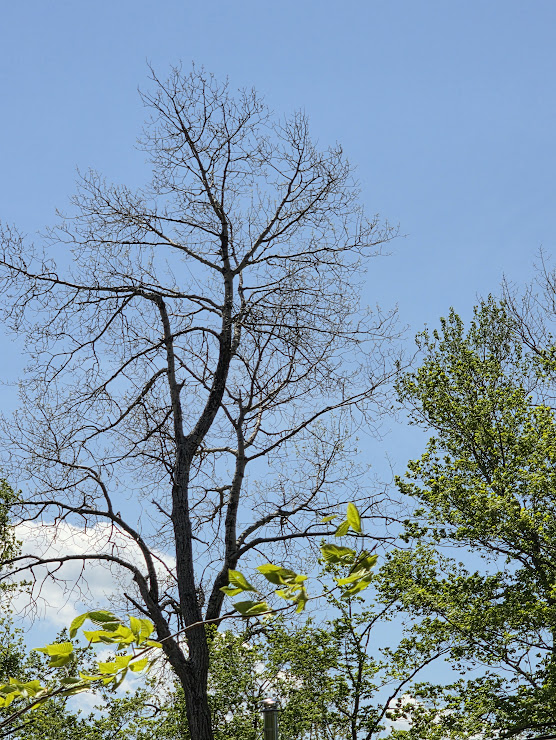
A few trees still have not leafed out. The aspens fooled me last year. I thought some of them were dead. This year I watched more closely. They flowered first, in catkins, then dropped them, and for a while the trees looked dead again — bare stems with swollen buds. If you did not know the sequence, you might mark them gone too soon.
The last two days were cool, cloudy, and wet. Fifties and forties. Heavy cloud, then darker cloud. Rain both days, not steady, but enough to keep the ground working.
Yesterday I finished planting the last twenty balsam fir. Forty came in, and the final twenty went into the slope north of the Upper Watch. That makes sixty balsam fir in that section now, set into a mixed slope of maple, cherry, aspen, and beech.
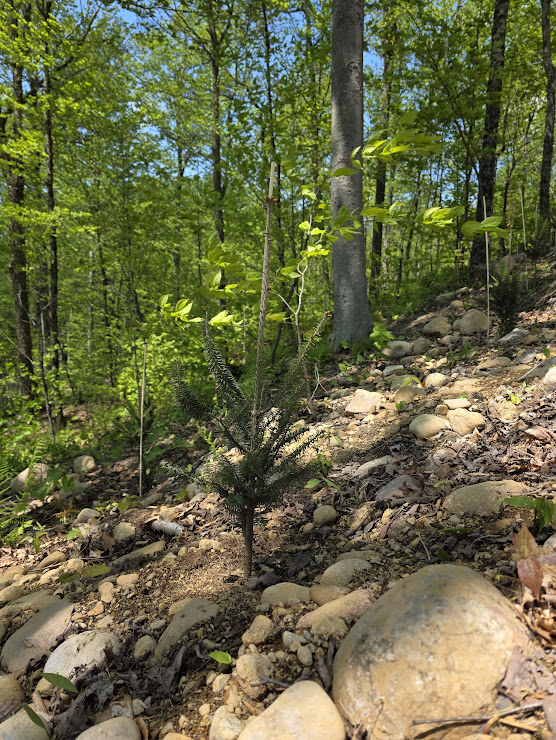
The stand sits north of the Upper Watch and east, or inland, from the shoreline of the pond. It is not planted inside the realtor swath, and it is not meant to fill the swath in. It sits beside it, along the northern shoulder of that opening.
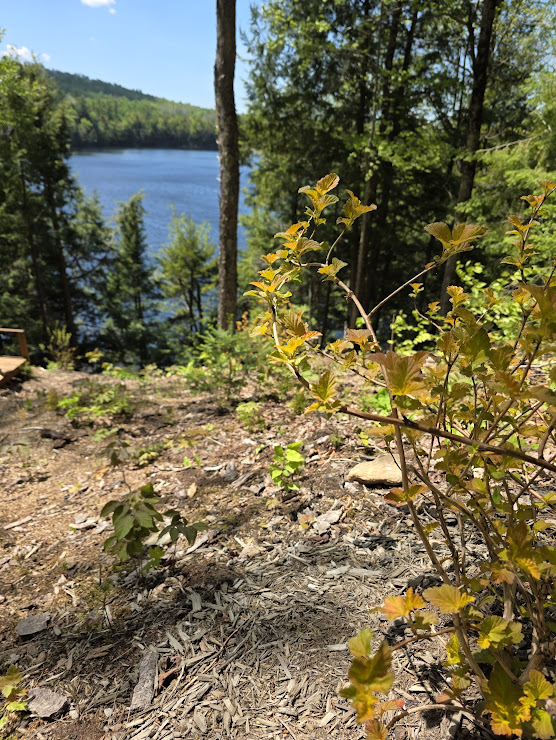
The realtor swath is the view corridor where the Lower Watch sits and where the Upper Watch looks through the canopy and trees toward the pond. We cleaned it up by removing the down logs that had been left there. The slope was seeded last year with Northeast wildflower mix, and those seedlings are coming up now.
That slope is not being pushed farther open. It is not being managed as a lawn or a permanent cut. Whatever trees and shrubs naturally return there will be allowed to declare themselves.
At the bottom of the swath, before the ground reaches the shoreline, there is a narrow riparian zone, roughly ten feet or so, with hemlock, river birch, balsam, and other shoreline growth. Earlier this spring, I planted red osier dogwood down along that edge as well.
Along the pond itself, outside that narrow swath, the shoreline buffer is mostly evergreen. Hemlock, spruce, balsam, and a few white pine hold the edge, with occasional river birch mixed in. The trees are not large, but they carry the character of that shoreline.
The new balsam stand is an attempt to extend that character farther inland, not across the view corridor, but beside it. A conifer shoulder. A northern edge. A way of letting the evergreen shoreline buffer reach back into the slope without closing the watch line by force.
Chris is especially looking forward to the balsam fragrance. After the first batch had gone in, we were on the Upper Watch one evening and she said she was already catching whiffs of balsam as the wind swirled. Not shade yet. Not cover yet. Just the first trace of the stand moving through the air.
There are other edge plantings already in place, but they did not all happen at once. Last year, five blueberry bushes and two ninebark were planted on the upper portion of the swath, with the ninebark sitting on the northern edge where they can catch sun. Earlier this spring, three hazelnuts went along the north line of the realtor swath. Those plantings feather the edge rather than erase it.
The beech are temporary witnesses. They are still standing now, but later this summer they are slated for departure by injection. Some will remain standing dead for a while. A few may come down next year. The balsams are being set into the future opening before that opening fully exists.
The balsam area is roughly thirty by forty yards. Not a plantation exactly. Not a thicket yet. A stand beginning inside another stand.
I suspect, without claiming the record has proved it, that this ground may once have leaned more heavily toward conifer. The pond edge still hints at that. Hemlock, spruce, balsam, pine. The inland slope may be showing what repeated logging left behind after the first cut, the follow-up cuts, and later cutting that likely targeted the conifers again.
That remains inference, not proof. But the planting is not random. It is a nudge toward something the shoreline still remembers.
The tomatoes are planted in their large containers. The remaining fabric bags are filled. Basil went into the three-gallon pots. Peppers and basil now have their places.
The change from yesterday to today is mostly wind and light. The land keeps teaching that wind is not an occasional event here. It is one of the main forces. Maybe that is spring talking. Maybe it is the pond, the slope, and the open fetch. But there are not many days when wind is not part of the record.
For now the pattern has eased.
Northwest wind. Warm sun. Leaves filling in.
Fair weather, at least for the moment.