
Winter Desiccation Baseline
The inspection was limited and visual. No final verdict was possible at this stage. The task was to establish a winter desiccation baseline before dormancy broke and the living tissue could answer for itself.
The Snowline Verdict
The wind is a thief at the working edge. Reconnaissance confirmed a hard survival boundary dictated by snowpack depth. The exposed portions of the young evergreens carried the record plainly: orange, bronzed, curled, dried, and uncertain.
Below the snowline, the protected tissue remained better hydrated. Above it, winter air and high-velocity wind scouring had worked the needles and leaves hard while roots remained locked in cold ground.
The visible line was not abstract stress. It was a field mark: the height of winter protection, the limit of shelter, and the point where atmosphere began withdrawing moisture faster than the plant could answer.

Hemlock Condition
The Eastern Hemlock cohort showed the clearest vertical split. The upper canopy carried a burnt-orange cast where winter exposure stripped moisture from the needles. Below the snowline, the foliage held more green and appeared less compromised.
That does not equal survival. It only establishes the first condition record: exposed canopy injured, protected foliage still viable-looking, cambium status unverified.
Rhododendron Condition
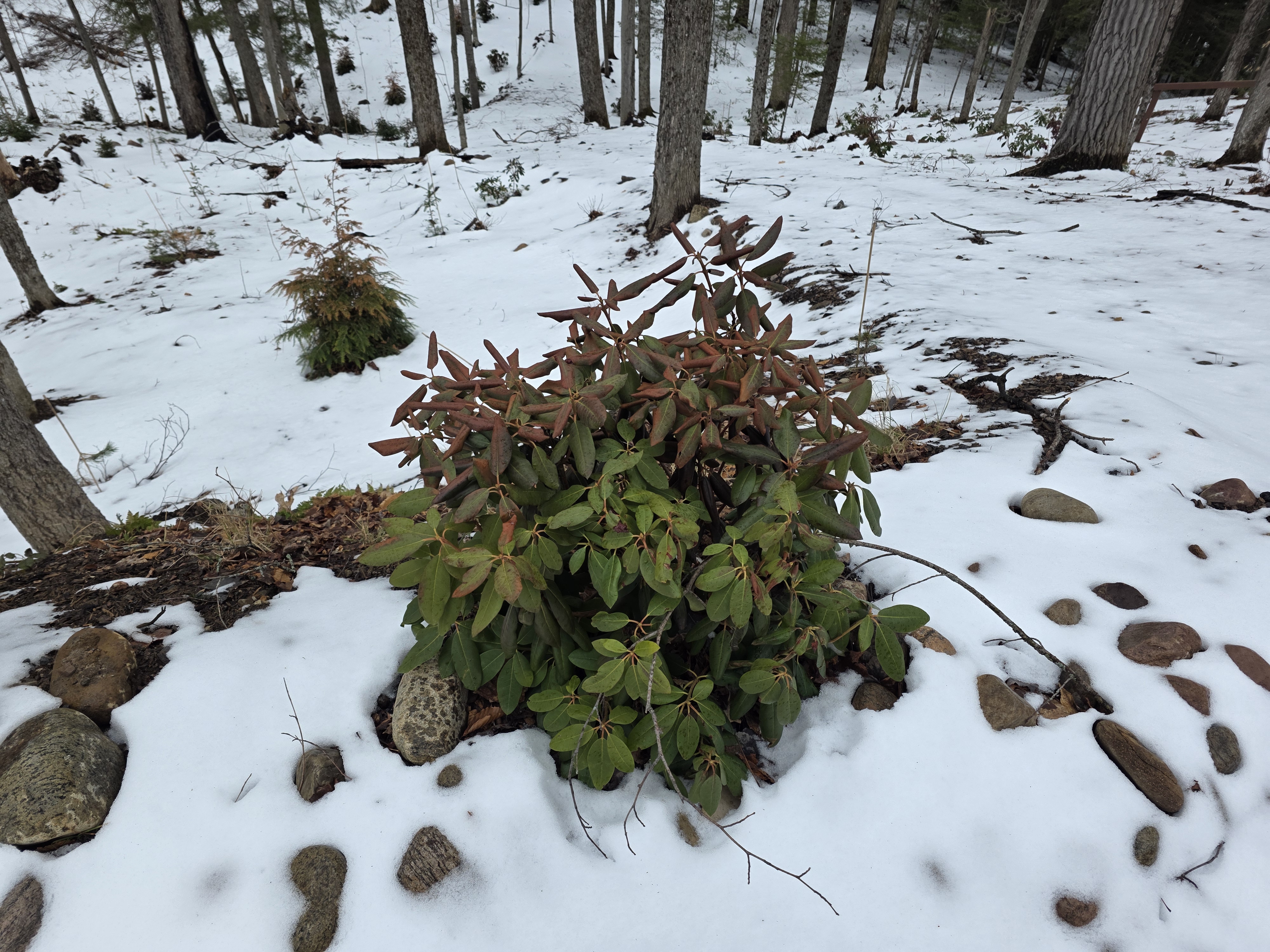
The Rhododendron cohort showed turgor loss and defensive leaf curl. The leaves were bronzed and tightened where they had been exposed above the pack. That curl is a survival posture, but it is also a visible sign of stress.
The final toll could not be assigned in March. The plant would have to answer later through bud break, leaf recovery, branch dieback, or silence.
Species Inventory
- Eastern Hemlock (Tsuga canadensis): Present — upper canopy desiccation observed
- Rhododendron (Rhododendron spp.): Present — bronzing and leaf curl observed
- Snowpack protection line: Present
- Winter wind scouring: Confirmed
- Cambium viability: Unverified
Baseline Result
The baseline did not declare failure. It documented exposure. The snowpack protected what it covered and abandoned what it could not. The upper foliage became the receipt for winter’s atmospheric withdrawal.
The follow-up record belongs after dormancy breaks. Only then can the Ledger separate cosmetic injury from structural loss.
The snowline marked the difference between shelter and exposure.