
FIT FOR SURVIVAL
I used to sell T-shirts at regional conferences and workshops where stream-assessment people gathered: agency biologists, consultants, taxonomists, EPA people, nonprofit staff, teachers, professors, and others who worked around water.
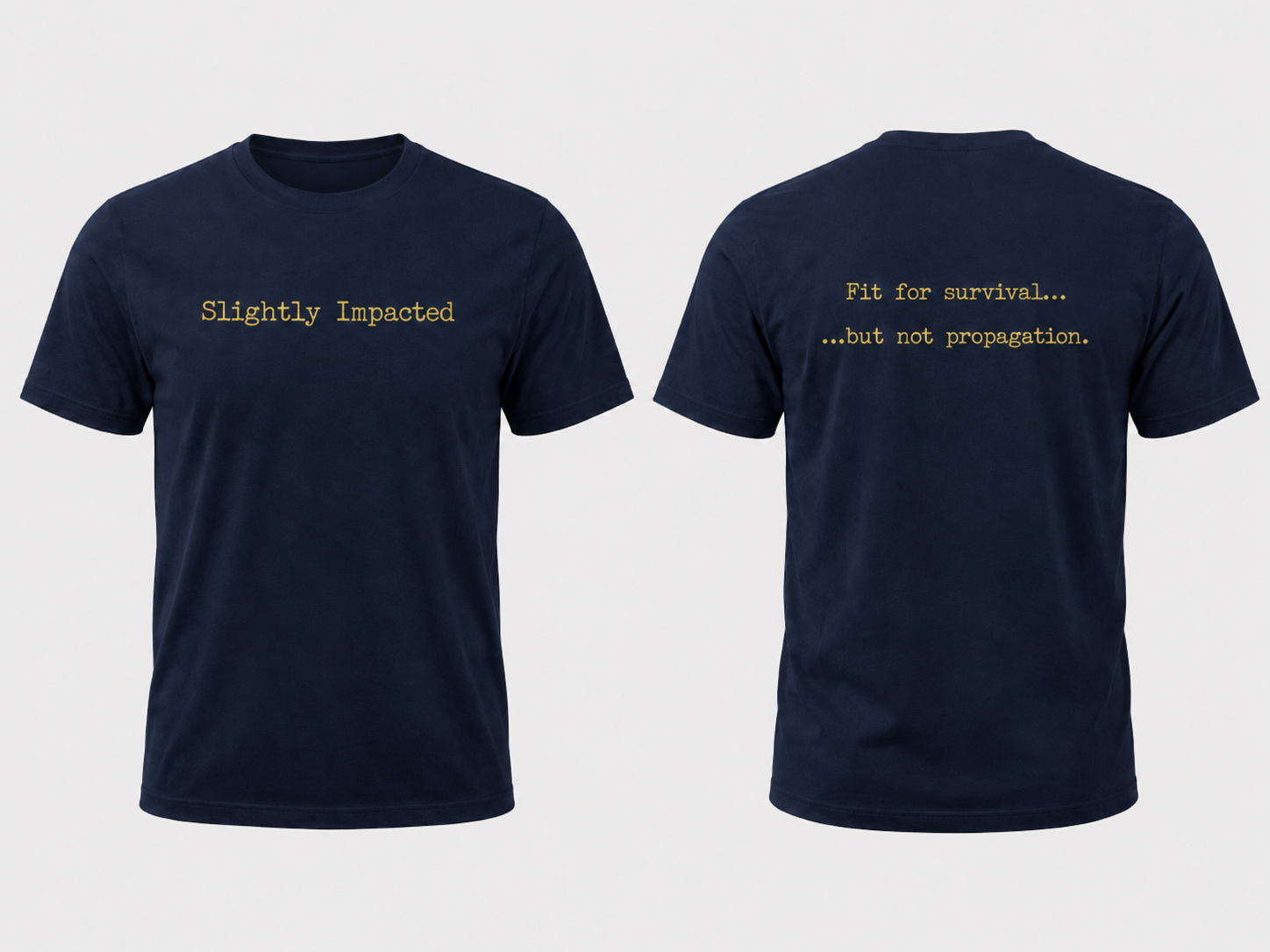
One of them said Slightly Impacted on the front.
The back said:
Fit for Survival
but not propagation.
People bought the shirts because they understood the turn. On the front, it sounded like a joke about the person wearing it. On the back, it became the language of stream assessment: alive enough to remain present, not necessarily fit enough to continue.
It was not really a joke.
Under the Clean Water Act, states had to assess and report on the condition of their waters. In stream work, biological assessment became one of the ways to answer the aquatic-life question, and benthic macroinvertebrates became one of the standard tools.
Other states used the term “slightly impacted” too, though their narrative definitions varied. In the New York DEC language I worked with during those years, the four categories were Non-impacted, Slightly impacted, Moderately impacted, and Severely impacted.
The words sounded simple. The work underneath them was not.
The categories came from indices: species richness, EPT richness, biotic index, percent model affinity, and, in later years, the nutrient biotic index. The numbers were the machinery underneath. The narrative descriptions were what most people could read.
The method belonged to the evidence too. A sample was not just a sample. The net mesh, the way rocks were disturbed, the level of identification, the quality control, and the metrics all belonged to the same chain. Before the category could be assigned, the sample already had to pass through a protocol. A method could be scientifically valid and still not be useful for official reporting if it did not follow the same state protocol.
Non-impacted water sat at the clean end of the ladder. The macroinvertebrate community was diverse. Mayflies, stoneflies, and caddisflies were well represented. Water quality was not expected to limit fish survival or propagation.
Slightly impacted water was where the language started to turn.
The New York DEC wording said the indices reflected good water quality. Then it added that the macroinvertebrate community was slightly but significantly altered from the pristine state. Species richness was lower. Mayflies and stoneflies could be restricted. EPT richness dropped. Water quality usually was not limiting to fish survival, but may be limiting to fish propagation.
The survival-and-propagation line was the one I kept coming back to.
Survival is not propagation.
A fish can remain in a reach long after the reach has stopped making more fish. Adults can hold on while the next generation fails under gravel that no longer breathes right, under flow that no longer sorts right, under chemistry that no longer gives sensitive species enough room.
I used to rag on the generic fish language. A carp can live in water a trout cannot use. A carp can make a living in conditions that would not support a cold-water stream. Trout are another account. Brook trout, brown trout, the cold-water fish people actually cared about in those streams, needed cleaner water and cleaner structure than the word “fish” admitted.
Later, the language tightened. It began to speak more directly about sensitive cold-water fish. I always felt my yapping helped push that point, even if only slightly. I was not the only one saying it. I was not the only one seeing it. But I said it often enough.
The biologists who wrote those descriptions did careful work. They knew the bureaucratic system they were writing inside. They knew what could pass through review and what could not. A trends report summary could go through a dozen rounds before it settled into the final public language. The science had to survive the review. The warning had to remain legible without sounding like an accusation.
That is how “slightly but significantly” got through.
“Slightly” softened the public face of the category.
“Significantly” kept the statistical truth in the sentence.
Anyone who had processed samples through to the report knew which word carried the weight.
I also learned that asking too many questions made some people uncomfortable. I was the one nosing around, reporting potential discharges, pushing on words that others were content to leave alone. Once, in an email that traveled farther than intended, a regional staffer wrote that somebody had better get their boy in line.
That was part of the same system.
Not all of it. Not everyone.
But enough to learn the pattern.
The public word was “slightly.” The technical word was “significantly.” The report could still say good water quality. The back of the shirt still said Fit for Survival, but not propagation.
The animals in the bed did not care which word made it into the summary.
I surveyed dozens of streams and wrote dozens of reports. Some of those reports are still out there somewhere. Others are stored on my old work computer. I have the Batten Kill reports. I have the White Creek reports.
The field part does not wait for storage.
The memory of a streambed stays in the hands.
One of the organisms that stayed with me was Baetisca sp.
It is an armored mayfly nymph, built low and deliberate. It settles into sandy substrate facing upstream. The carapace is hinged at the front. The animal can raise the back of it, letting current swirl in and around the carapace and bathe the gills with oxygen.
When sand or sediment contacts the exposed gills, the carapace closes back down and protects them from abrasion.
That animal is not an abstraction. It is not just a number inside an index. It is posture, current, sand, oxygen, abrasion, and fit. It tells you something about the bed by the way it lives there.
That is what the categories were trying to summarize. They were taking the posture of animals, the absence of animals, the replacement of animals, and turning all of that into a public word.
Non.
Slight.
Moderate.
Severe.
The riverbed did not always wait for the word.
The Batten Kill crossed administrative lines. Its headwaters and upper reaches were in Vermont. Its lower river ran through New York. The watershed was nearly split between the two states, and the two programs did not handle the work exactly the same way. Collection protocols differed enough that direct comparison was not simple.
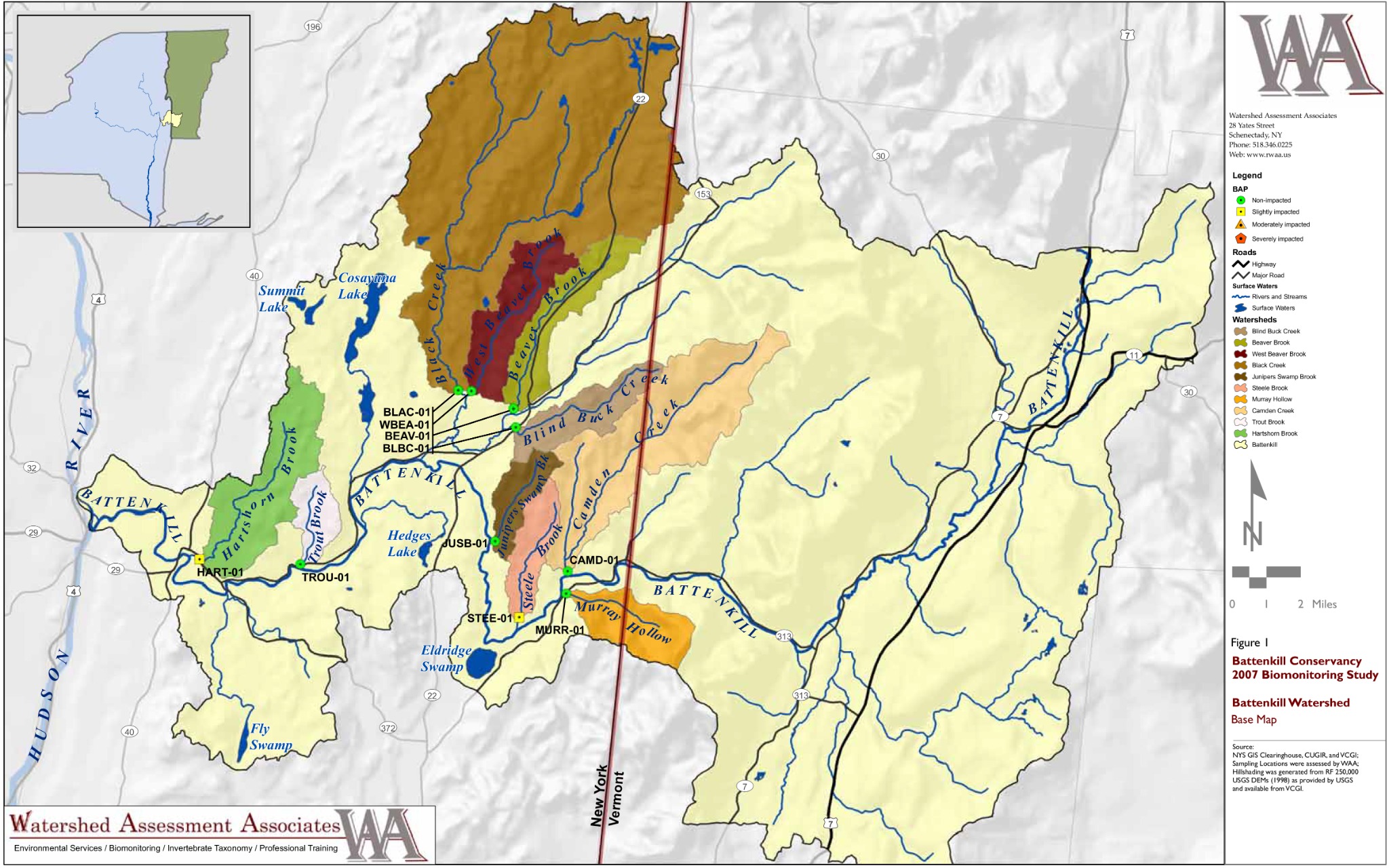
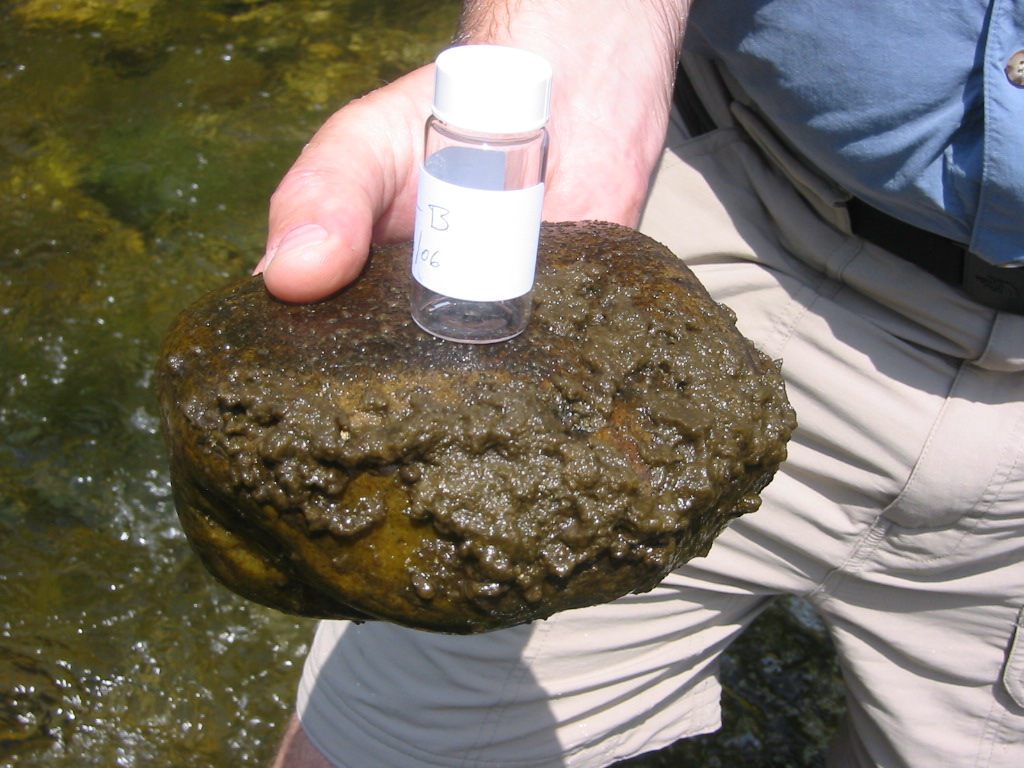
In 2006, that administrative split came into play when I found what I later knew as Didymo in the New York portion of the Batten Kill watershed. Didymosphenia geminata. Rock snot.
At first I sent images to NYS DEC contacts, including one person I knew well and trusted. He was an intern then and later continued in stream biomonitoring. Within a reasonable time, he came out to look at it and take a sample. That response was appropriate. From where I stood then, still early in my own climb through the reliability ladder, it felt like the observation had been taken seriously enough to check.
We then headed downstream by canoe from Route 22 to look over the extent.
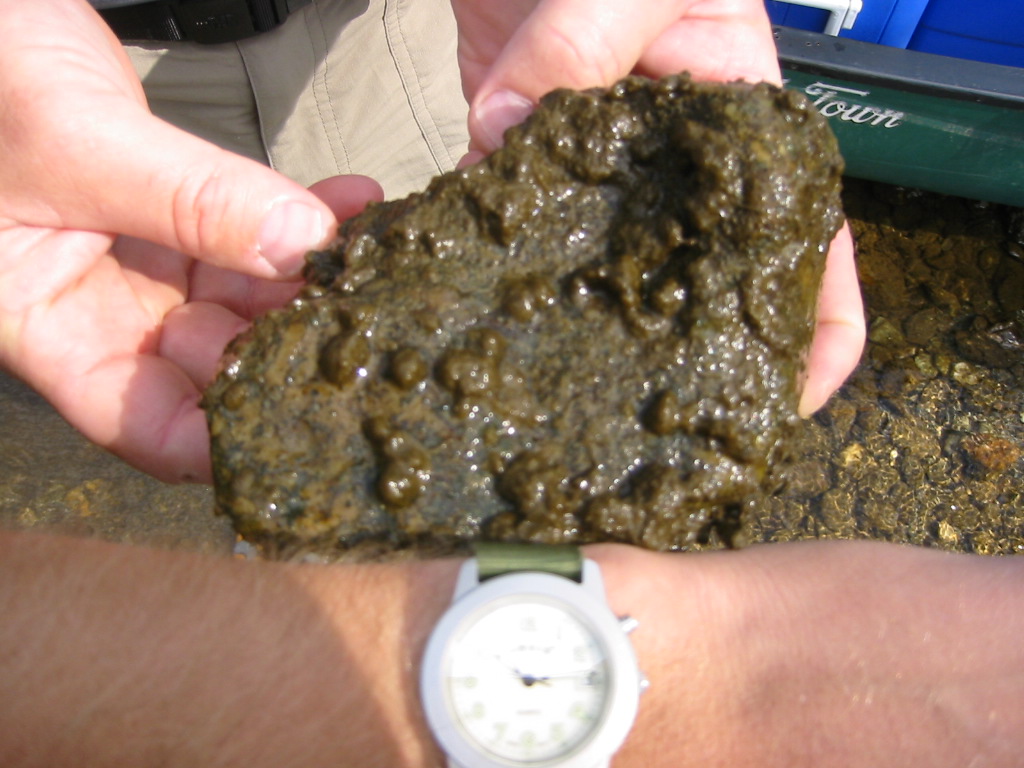
The Batten Kill had a carpet of it for several kilometers.
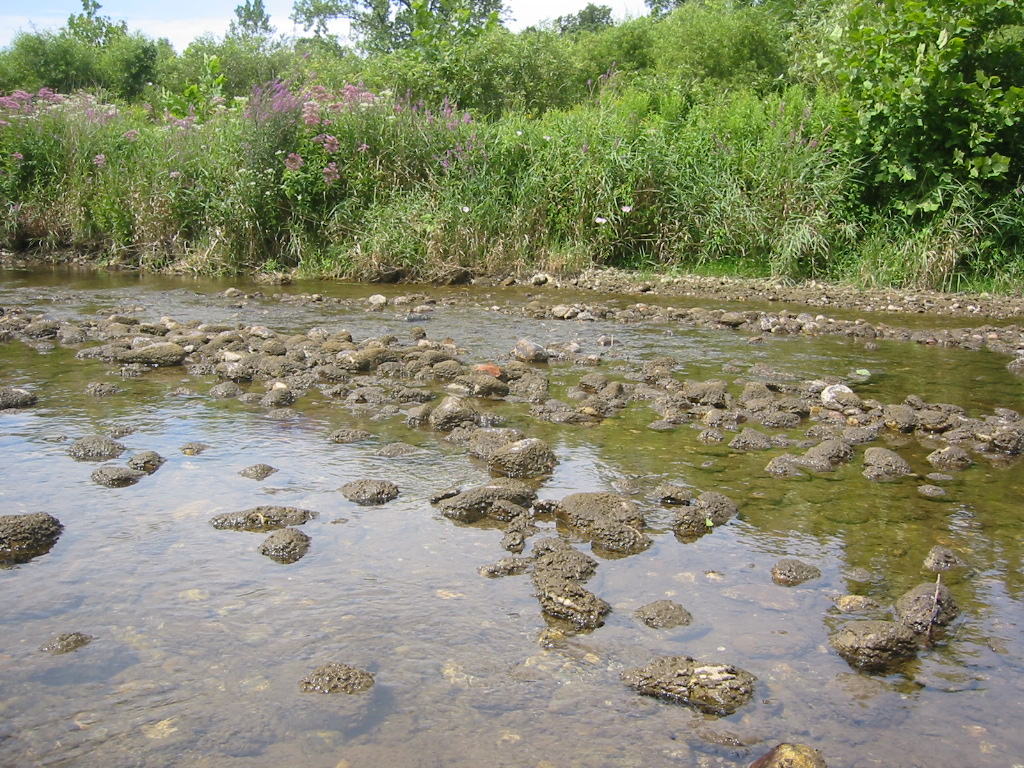
Then the sample sat.
Months passed. One day at the lab I received a batch email from Vermont DEC. It had gone out to a mailing list with a one-page pamphlet telling people to be on the lookout for Didymo. The pamphlet had images.
As soon as I saw them, I knew what we had been looking at.
If the sample had already moved through confirmation and notification, Vermont would not have been surprised by my call. But when I contacted Vermont DEC after seeing their Didymo notice, the reaction was immediate. They did not seem to know the Batten Kill already had it in the New York reach. Someone from EPA would be calling, they told me. The sample was to go to Sarah Spaulding at USGS / EPA Region 8.
From there, the pace changed. I was being asked to get my sample sent to EPA for confirmation. What happened inside New York after its sample was collected, I do not know. I only know that the bed had shown the condition before the official record caught up.
I was still climbing the reliability ladder in my career. That is part of the story too. The river may show something clearly, but the person reporting it still has to be believed. Field evidence does not enter the official record by itself. It has to pass through people, titles, habits, caution, delay, and sometimes doubt.
By the time the system caught up, the bed had already made the argument.
That is one of the things benthic work teaches. Official recognition is often late. The substrate changes first. The sample comes second. The report comes later. The public language comes later still.
White Creek taught the lesson another way: not through a sample sitting on a shelf, but through a channel changed by track and blade.
In the 2001 White Creek report, we called it channelized and dredged. Between two biological sampling dates, site 4 and at least 0.6 miles upstream had been worked by the town of Salem. The purpose was flood prevention. The report said the work exceeded the permit and caused extensive damage to the streambed and banks.
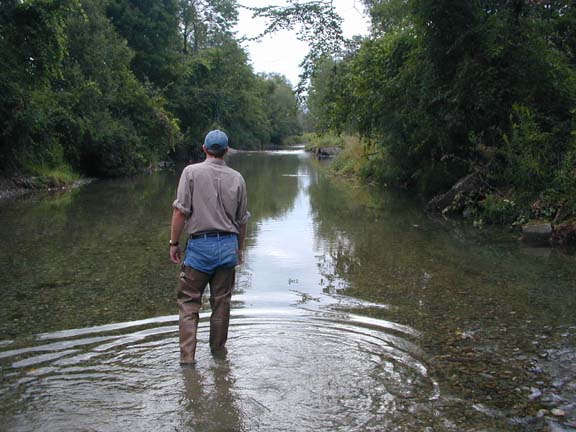
I remember the machine because the bed remembered it first.
What stayed with me first was the bed.
The machine altered the channel directly. The White Creek valley altered it more slowly. One was track and blade. The other was channelization, dairy runoff, nitrogen, bacteria, and years of treating a stream as a drain with water in it.
The emergency work may have been done in the name of keeping water moving through town. That is how these things often happen. Open the channel. Push gravel aside. Clear the bridges. Make the stream behave like a ditch long enough for everyone to feel safer.
But a stream does not become safer just because it has been straightened.
When the bed is flattened and the gravel is pushed into berms, the pool-and-riffle sequence is broken. Sediment transport changes. Water accelerates through the pinch points. The channel loses places where energy can spend itself without cutting the banks apart.
That valley had been worked over long before that one machine entered the channel. White Creek had been channelized before. Dairy farms lined the watershed. Best management practices existed, but existence and use are not the same thing. We ran chemistries. Nitrogen could be high. Coliform and E. coli testing could get to the point where the result stopped being a useful number and became a condition: too numerous to count.
The categories could hold that information. They could score it. They could describe it.
But the bed carried it first.
That is why the word “slightly” always bothered me.
Not because it was false.
Because it could be true and still not say enough.
Slightly impacted water could look good to a person standing on the bank. It could hold fish. It could still have riffle life. It could still be called good water quality. But the first break in the ladder was not always survival. Sometimes the first break was continuation.
Propagation is the quieter test.
That is what I carried out of those years. Not only the names of taxa. Not only the reports. I carried a suspicion of easy words. I learned that a system can still look alive while the terms of its future are being changed.
Now I stand on the bank of one of the accounts I am watching.
I have always lived in a watershed. That is not the difference. The difference now is that I own a piece of the edge. I am in the riparian area, close enough for my choices to reach the water directly. The swath, the footpath, the dock, the places I stand, the way water moves off the bank — all of that belongs inside the account.
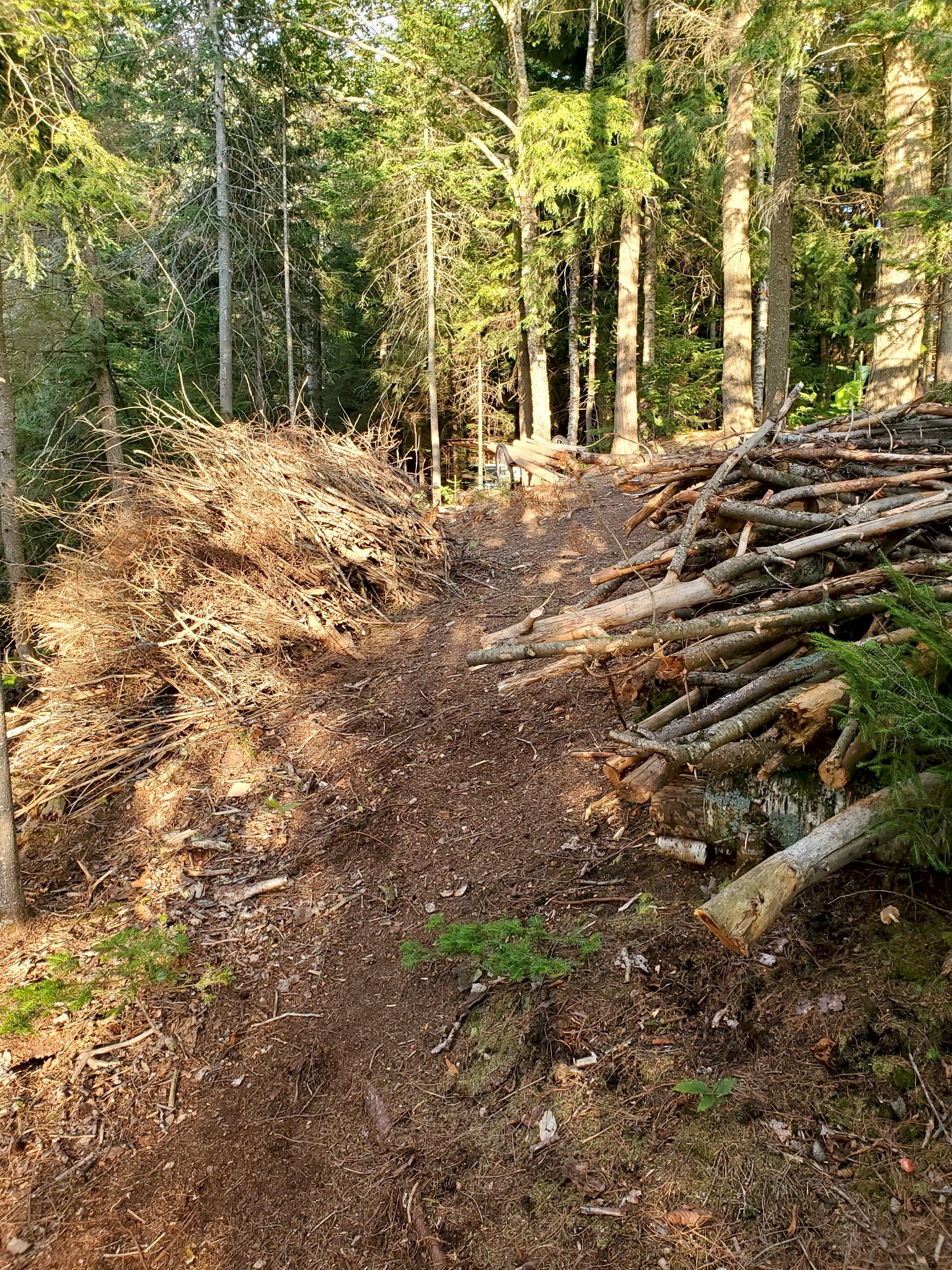
The sponges were there before my documentation. They do not need me to name them in order to live.
I do not assume I am the main pressure on the place. I also do not get to remove myself from the account.
The same is true of the dock.
I set a baseline there because the fishing from that edge changed what I understood about the water within reach. I understand that baseline more precisely now. It records the fishery as I encountered it under the management conditions existing in 2026; it is not an unmanaged ecological baseline. If that condition changes later, temperature, oxygen, bloom, fish movement, season, distance from shore, stocking, removal, recruitment, and changes in the fish community may all be part of the answer. My presence may be a small part of it too. Maybe not the deciding part. Maybe not even a measurable part. But I do not get to stand outside the list.
That is not confession for effect.
It is part of the audit.
A parcel owner with good intentions is still an alteration. The cleared view is not neutral. The footpath to the water is not neutral. The dock is not neutral. Even the places I choose to stand and look from become repeated pressure on the edge.
Care is not the same as absence.
The old categories taught me not to be satisfied with presence alone.
A thing can survive and still be losing its future.
I carry that line from the Batten Kill and White Creek to the edge in front of me. Not as a category. Not as a shirt. As a warning against easy words.
The official word may come late.
The bed speaks first.