
LITTLE KETTLE POND
Date / Moment: June 8, 2026, with comparison images from September 30, 2022 and June 1, 2023.
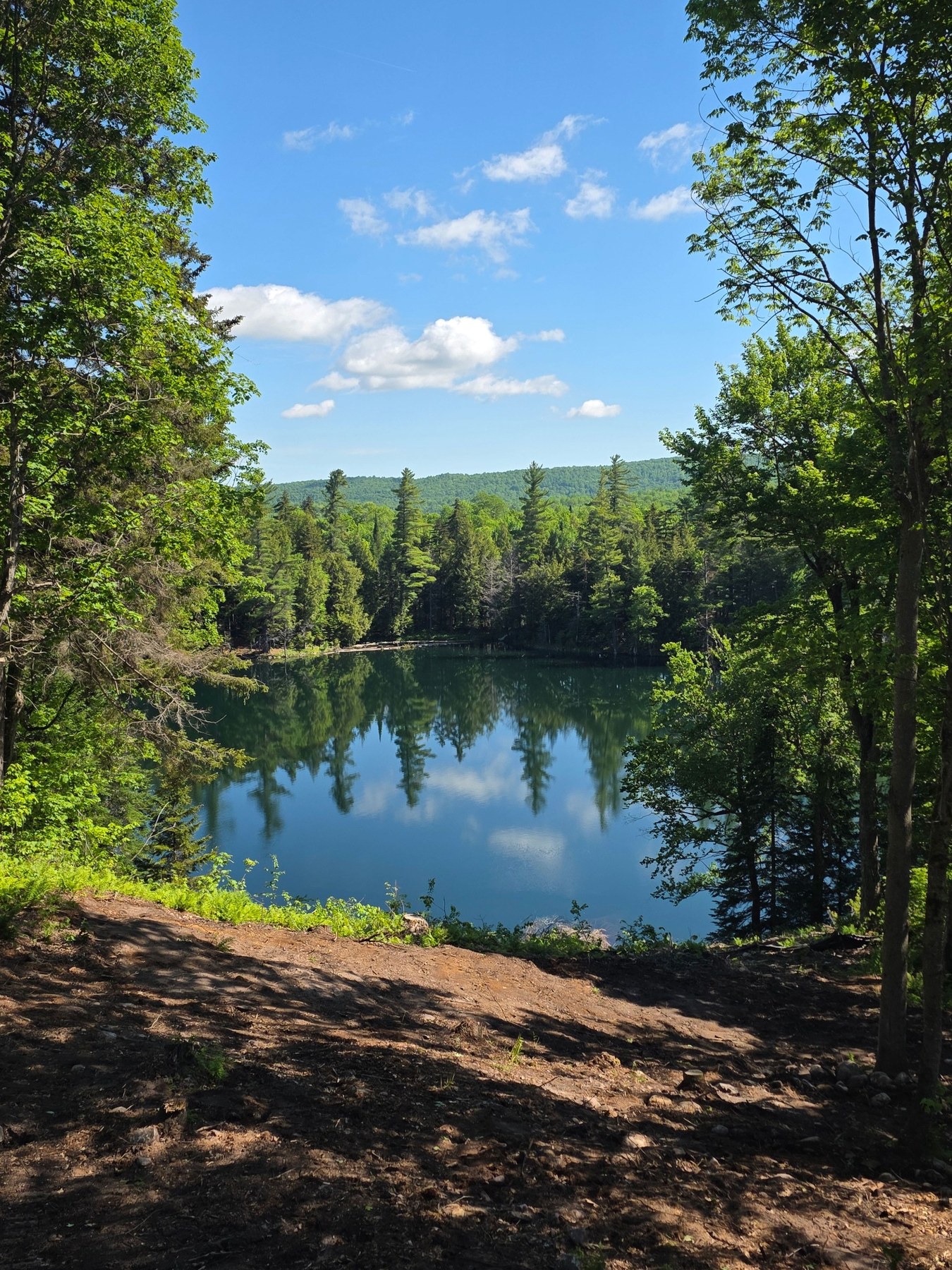
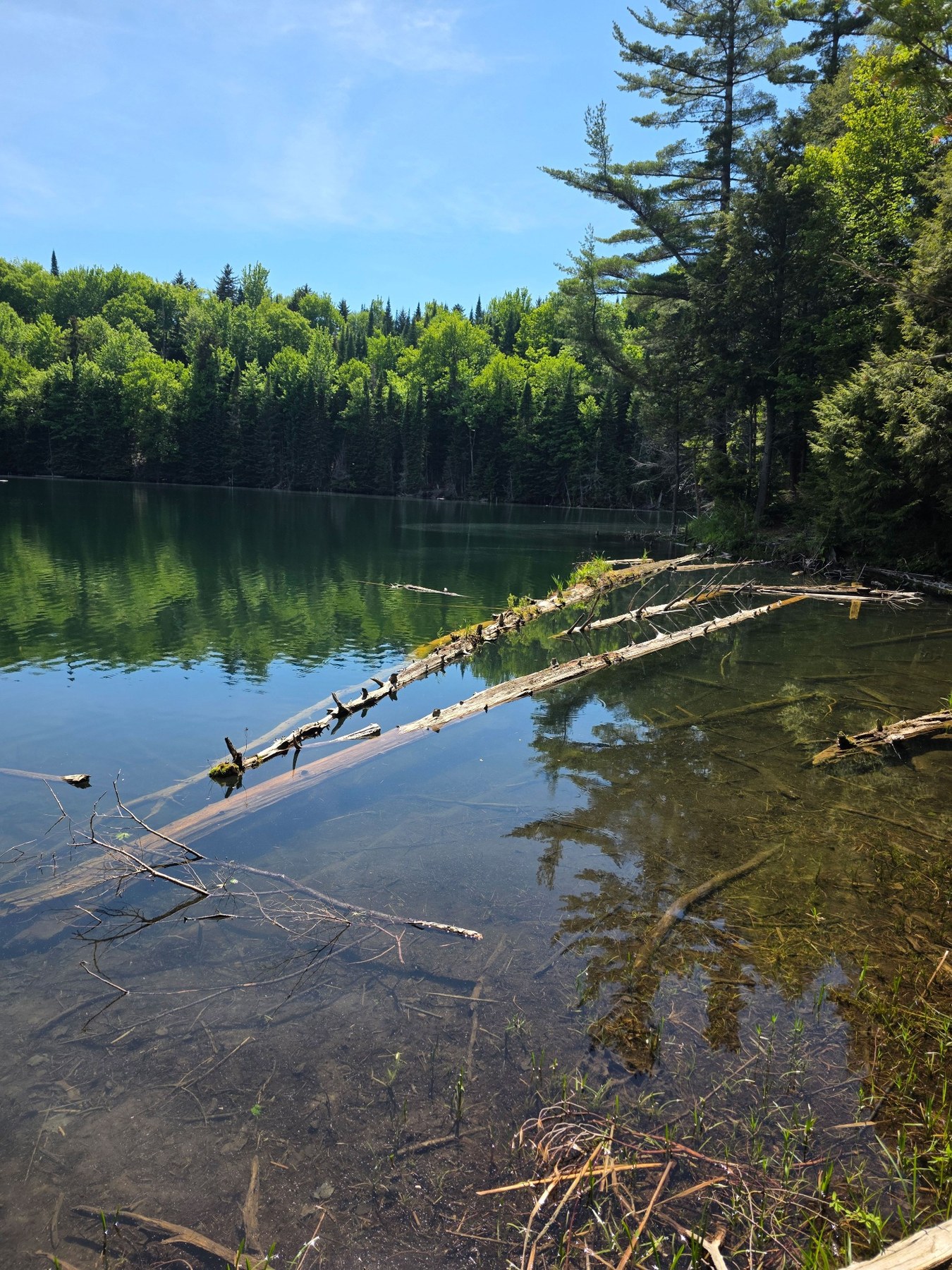
From the lot above, Little Kettle Pond still reads as quiet water in a wooded bowl. The photograph softens the condition. The green cast is there, but from this distance it can pass as ordinary reflected forest and sky. From above, the basin looks like an intact Adirondack pond: dark water, reflected clouds, forest around the rim, and a low ridge beyond it.
That is part of the problem. A pond can look whole from a distance and still be carrying damage.
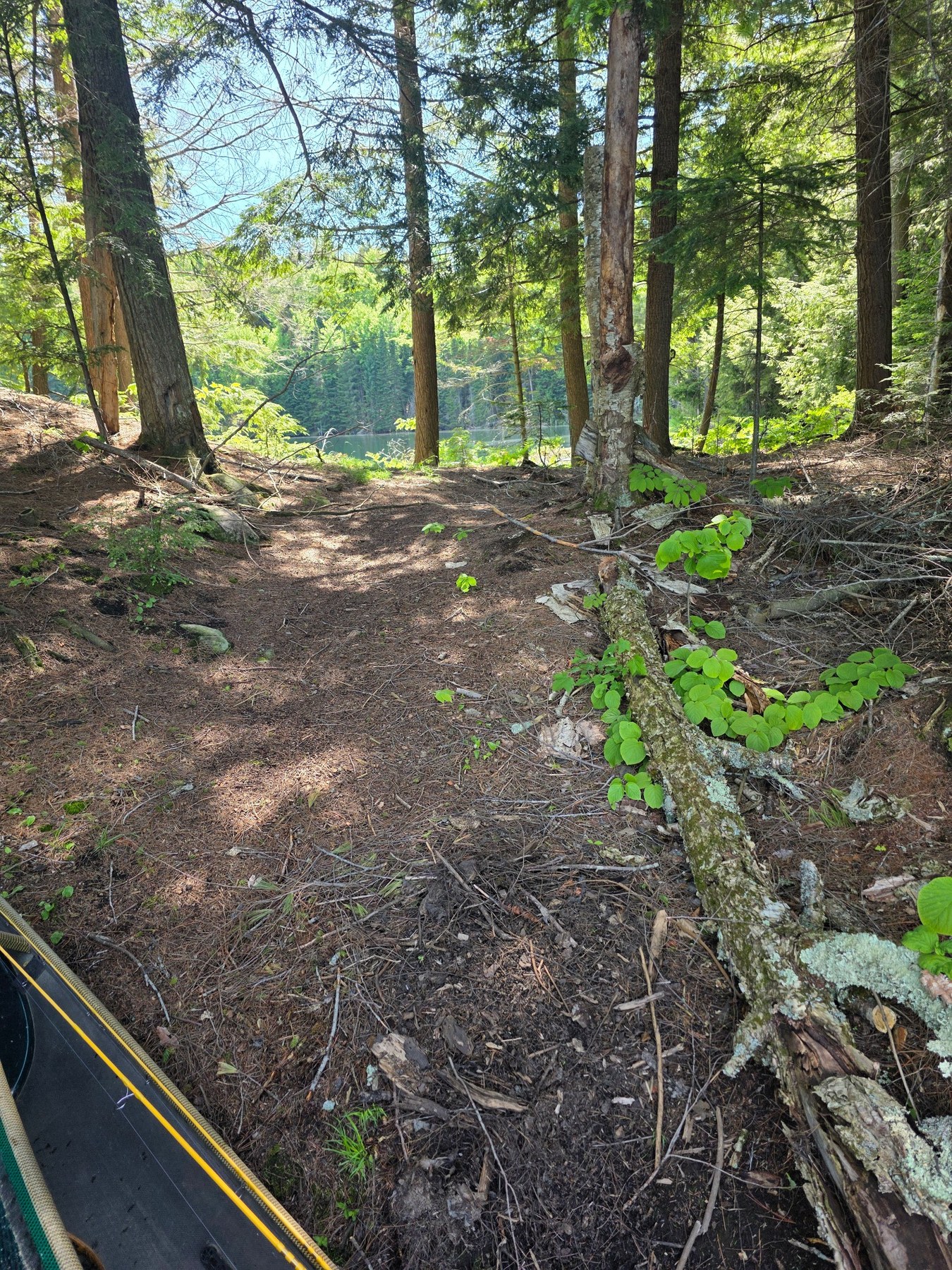
Little Kettle Pond sits close enough to the larger pond system that the separation feels almost accidental. From the canoe, the crossing to shore is short. From there, the walk is across a narrow wooded divide. The pond is hidden by landform more than distance.
The topography explains the isolation: a kettle-and-esker landscape where the esker runs between the larger ponds and the smaller basins, making a raised, sorted line through the system. Little Kettle Pond is one of those enclosed kettle basins, a bowl of water close to the larger water but still behaving like its own container.
The easy story would be that the recent sale is the turning point: private land changing hands, access changing, guides and anglers losing a place they knew, development arriving where a fishery had been. It is a compelling story because it is visible. It is recent. It has winners and losers.
But the greater pond system was not untouched before that sale.
Long before the present development, the larger landscape had already passed through logging, private holding, camp use, impoundment, fishery alteration, stocking, reclamation, and renewed management. The water had already been asked to serve human purposes. The current transition may change access and ownership, but it did not introduce human use into a clean system.
A 1933 newspaper account shows the older sporting system plainly. It describes a private game preserve with camps, trails, boats, hunting, and fishing. The larger water was known for lake trout, including large fish. The nearby small ponds were part of the arrangement too: one described with rainbow trout and speckled trout, the local name for brook trout, and Little Kettle Pond described as brook-trout water. The ponds were reached by short carries from the larger water.
The old account does not prove the Camp Never Tell name, but it does prove enough. The small kettle ponds were not incidental scenery. They were part of the sporting system: lake trout in the larger water, brook-trout water at Little Kettle Pond, other trout water nearby, an old flat-bottom aluminum pond boat waiting on the Little Kettle side, and only a narrow esker divide between them.
Some of that arrangement is still visible. The boat remains. So does the bloom.
On September 30, 2022, I first went to Little Kettle Pond to fish it, or at least to see if it could be fished. On paper, it presented the old Adirondack pond illusion: a small basin, tucked near larger water, set off by contour and access, close enough to reach but separate enough to suggest its own history.
On the ground, the pond still had that look: a wooded edge, emergent plants, dark reflections, and enough clarity near shore to read the bottom. But the first close look also showed the problem. The water carried a green cast then too, and the substrate held a visible algal/flocculent layer. It was not the heaviest bloom I would see, and not every visit is documented by photograph, but the condition was already present. Over the intervening years I saw it again. By June 8, 2026, the early bloom had begun once more.
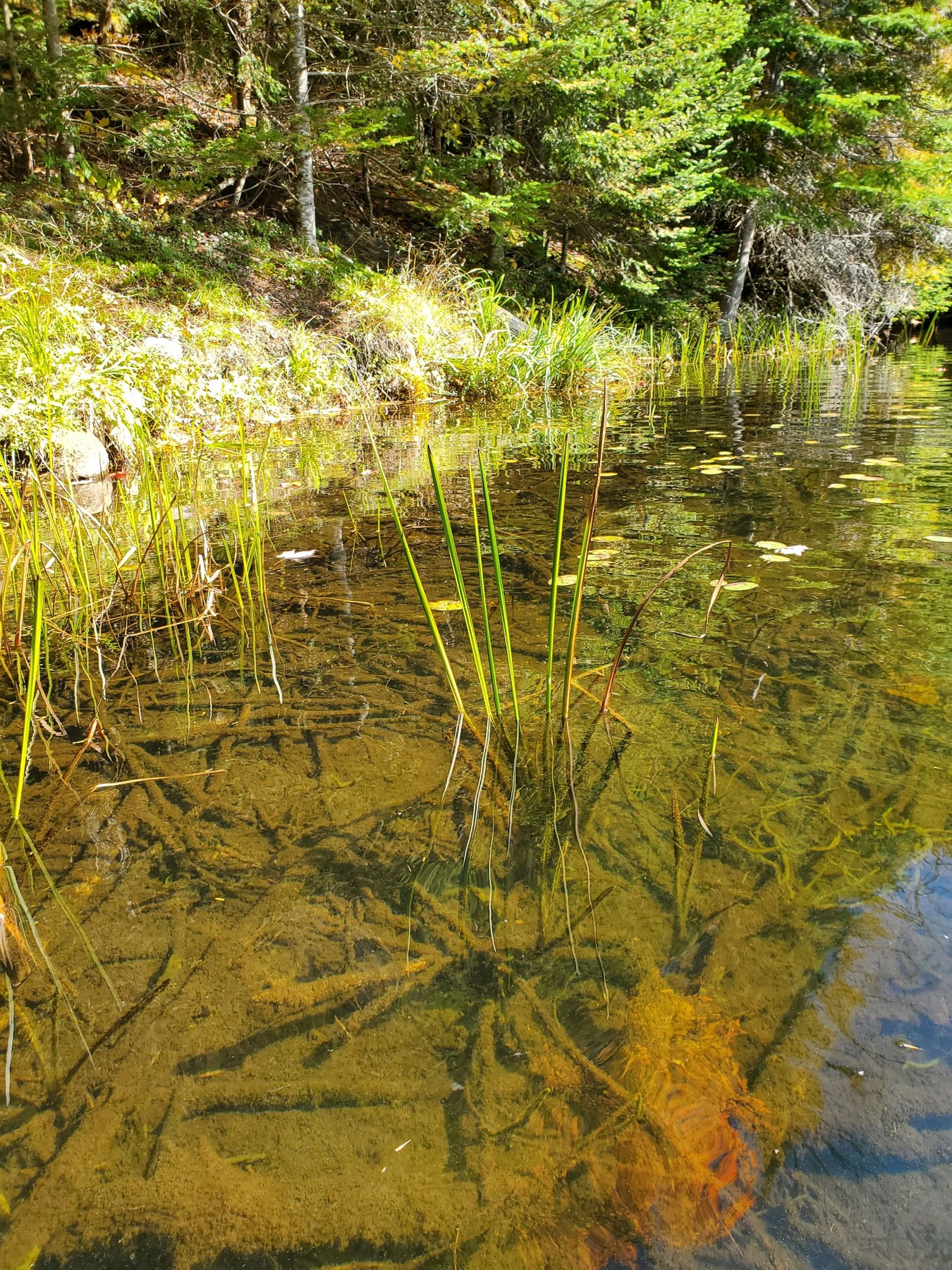
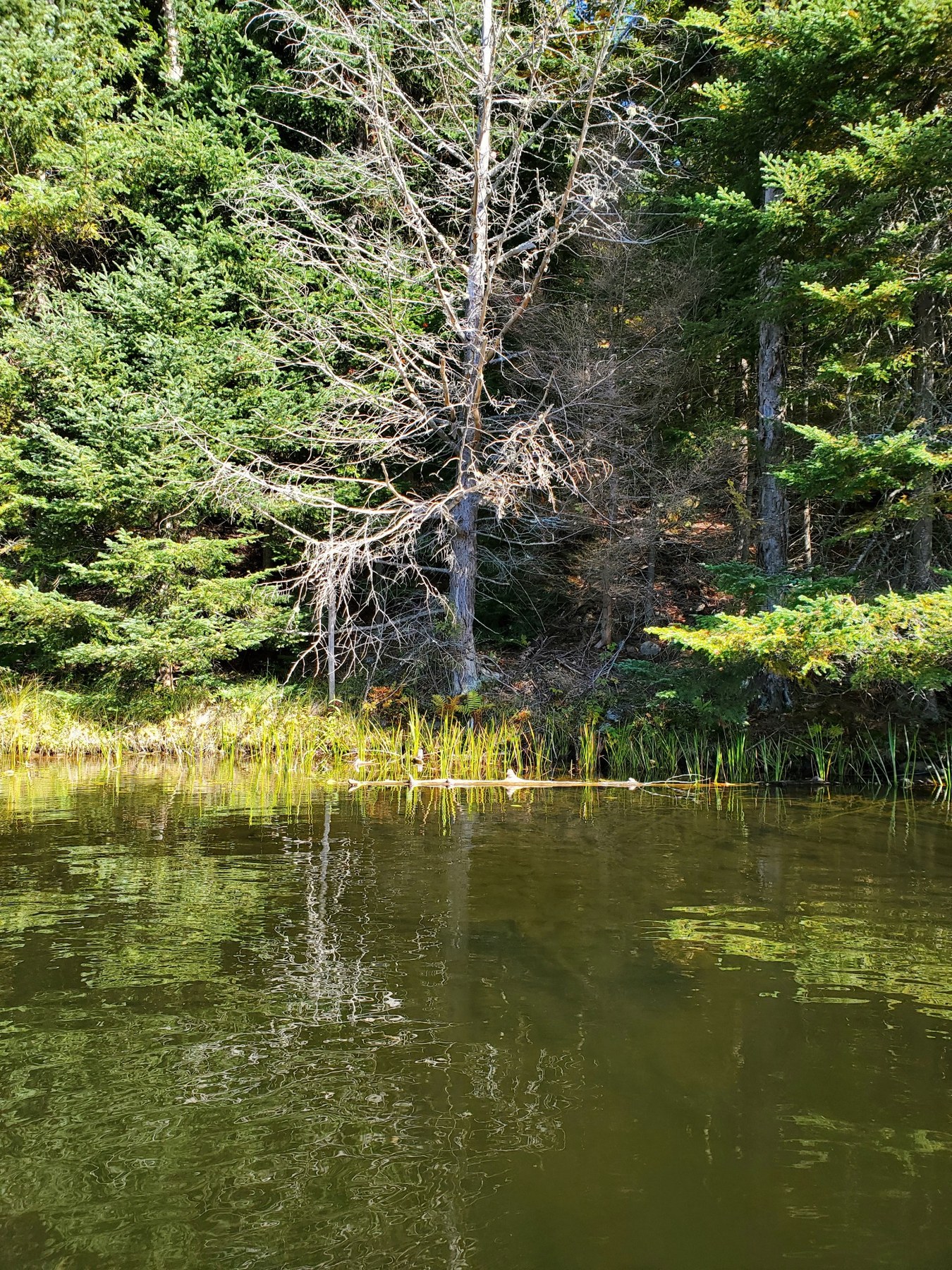
The transition is plain enough: this was not a clean pond that suddenly spoiled in one recent season. The illusion was structural: a basin that looked fishable by map and margin while already holding its history.
There is no known surface inlet bringing obvious nutrient load into this pond, and no direct surface-water connection to the larger water nearby. When the owner asked what I thought was causing the bloom, I read it as excess nutrient loading tied to the pond’s fishery history and stored inside the closed basin. He later told me the fisheries biologist had offered similar reasoning. The likely source is internal and historical: organic material left from earlier use.
In that reading, the spring bloom is not a mystery arriving from outside. It is the pond turning over and showing what is stored in it.
The bloom has not been confirmed toxic here by testing in this record, but its appearance and persistence make it a safety concern, not just an aesthetic one. This is not a condition I expect to see corrected quickly. A closed kettle basin can hold the past for a long time.
The fisheries reports widen the scale from Little Kettle Pond to the larger upper pond system above the dam. That system was reshaped in 1980 by a concrete dam built on the headwaters. After flooding, a rotenone reclamation was used to clear the fish community and return the water toward brook-trout management. The report records yellow perch, white sucker, brown bullhead, and various minnow species as part of the fish community targeted by that reclamation. A self-sustaining lake-trout fishery was eliminated too.
The reset did not hold as a clean slate. Brown bullhead appeared again in early survey work. White sucker appeared later. Recent fisheries surveys record brook trout alongside white sucker, brown bullhead, pumpkinseed, and creek chub.
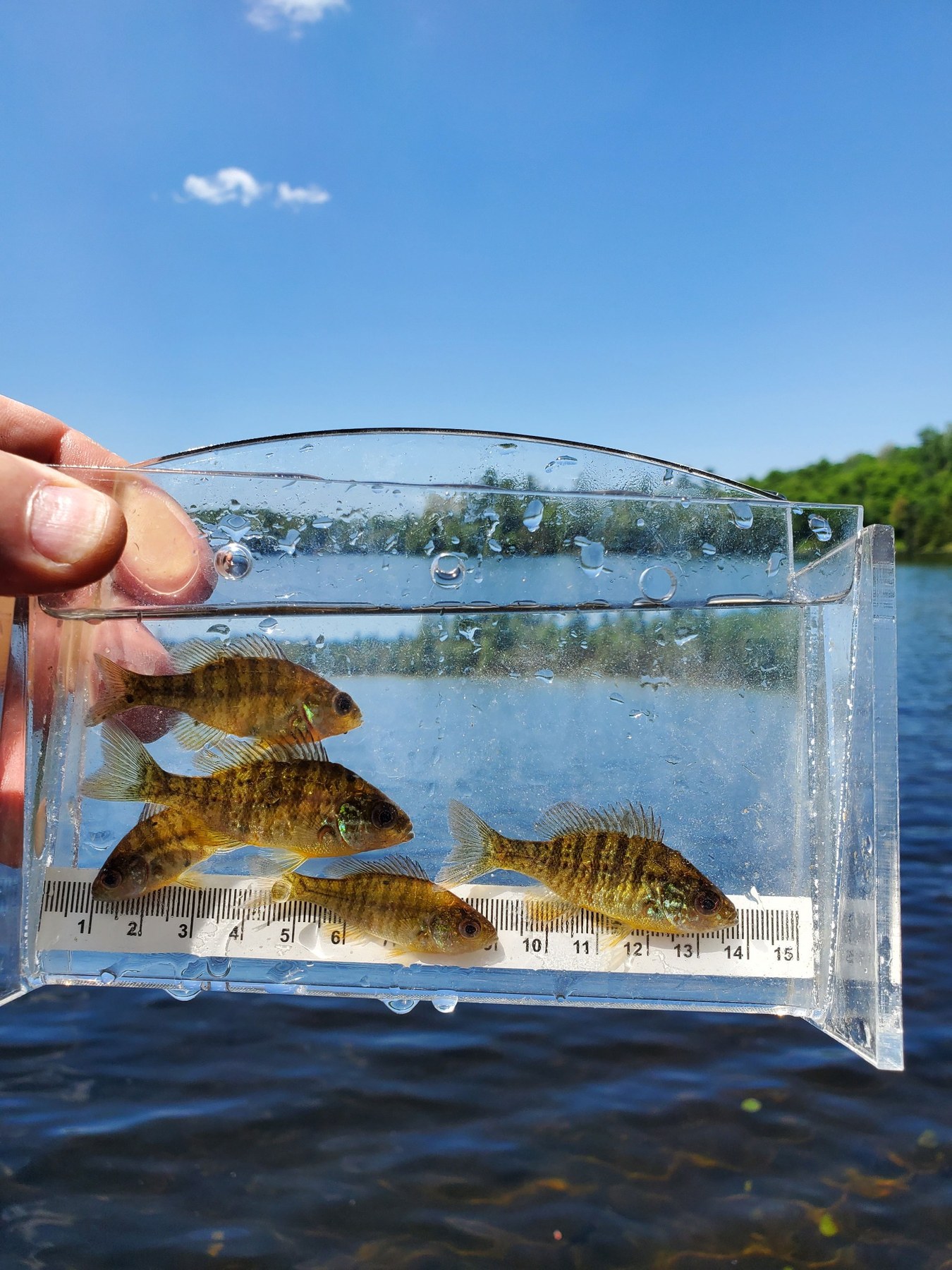
The current fishery is not wild water left alone. It is a managed brook-trout fishery in a system already altered by damming, stocking, reclamation, survival, reappearance, and correction.
The professional management record was also interrupted. Earlier survey and removal work did not continue in a clean line from the old camp era to the present. Under newer ownership, the survey work was taken up again to determine whether the intensive management program should be reestablished. The present survey and removal work is not a casual amenity. It is active management intended to hold the fishery near a selected brook-trout condition..
That is where the criticism of the current transition becomes complicated. Development can damage a place. So can access pressure, shoreline work, careless roads, runoff, and the ordinary machinery of turning land into lots. I do not need to defend development to say that the older era was not clean simply because it felt more private, more sporting, or more Adirondack.
A beloved fishery can still be an altered one. A place people mourn losing may already have been carrying the consequences of how they loved it.
The physical evidence remains firmer than the name: the kettle basin, the esker, the narrow divide, the recurring bloom, the old boat, the altered fishery, and the management work still trying to hold the larger water in a brook-trout condition.
The surrounding property has been sold, and future access to Little Kettle Pond may be limited. That does not change the pond’s condition, but it may change the record I can make of it.
Little Kettle Pond is not evidence that the present development is harmless. It is evidence that the past was not harmless either.
If I can no longer cross to this small basin, the watching does not end. The water will keep showing what it carries.