
THE MAP TOOK IT BACK
DATE: May 2026
LOCATION: The place
We came here first as a practical matter.
A place to retire.
A place to spend the last quarter.
A place with weather, work, trees, water, repairs, mud, mosquitoes, wind, and the usual long list of things that need doing before a person can sit still long enough to understand where he is.
Then the stories started arriving.
Neighbors talked. Local names surfaced. Old newspaper clippings appeared. Someone handed me an old guidebook as if it belonged to this ground. There was a chapter about a place with a familiar name, and because I had already begun listening to local stories, I followed it.
That is how these things begin.
Not with proof.
With proximity.
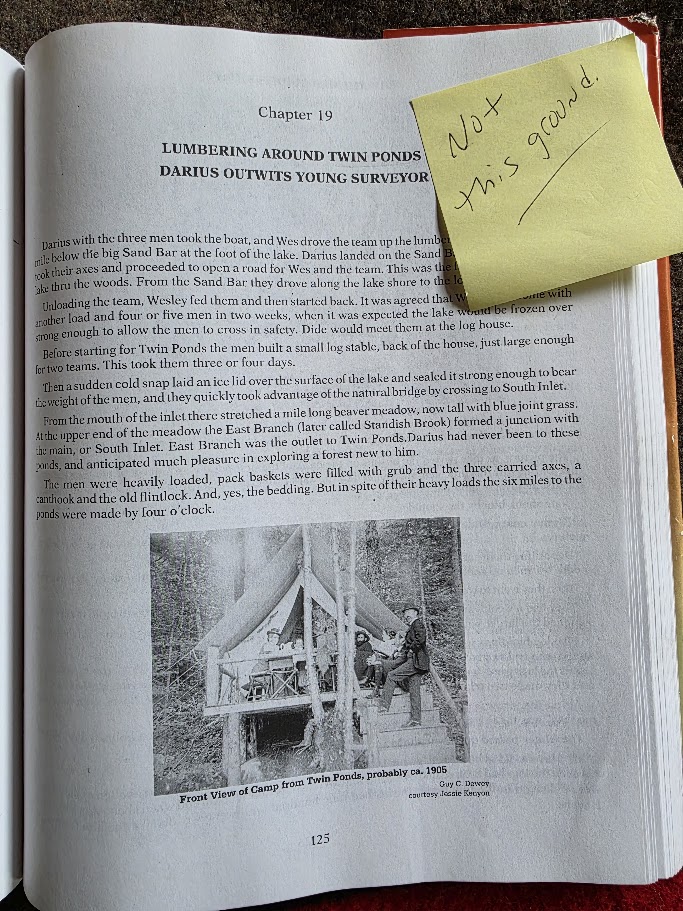
The chapter had cedar in it. A cedar swamp. Boat wood. Old travel. Old ground. The kind of material that pulls at a person who has already begun watching pond edges, raised water, drowned margins, dredged channels, and the memory of two dugout canoes pulled from northern wet ground.
It seemed to fit.
So I followed it farther.
The guidebook led to maps. The maps led to old boundaries. The old boundaries led to a correction I did not want but could not ignore: the chapter was not describing the ground I thought it was describing.
The map took it back.
That could have ended the matter. Maybe it should have. But it did not. The wrong lead still opened the right habit. It forced the question of place. It made me look harder at the wet ground in front of me. It made me separate archive from assumption. It made me admit that a story can be local, repeated, convincing, and still attached to the wrong pond.
That is part of the ledger too.
Along the way another thing happened. While following the local archive, I began finding family. Fred LaBeouf, my great-grandfather, appeared in the record. I had never met him. I knew almost nothing about that line. My grandmother, his daughter, lived with us near the end of her life, and I never asked the questions I now wish I had asked.
That absence is part of this record.
Not guilt exactly.
Not romance.
Just a missing conversation.
So I made notes.
At first they were scratches on paper. Weather. Water. Trees. Old names. Questions. Mistakes. Things seen from the pond edge, from the barn, from the Upper Watch, from the road, from wet ground. The notes were not meant to prove anything large. They were a way to keep from losing the shape of what I was noticing.
Around the same time, artificial intelligence became available enough to test as a working tool. Not as author. Not as witness. More like a reflecting glass. A sorting board. A second surface to throw the notes against and see where they broke, repeated, overreached, or held.
That became Field Scrawl.
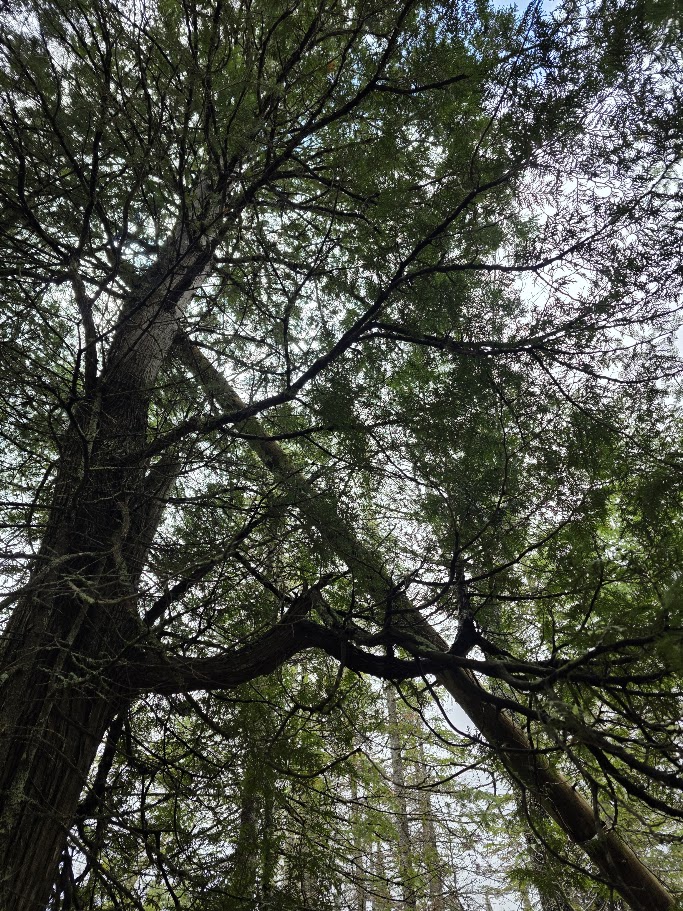
The name fits because it is not clean. A scrawl is not a monument. It is a mark made while still standing in the weather. It can be revised. It can be crossed out. It can be corrected by a map, a bird call, a stump, a dam line, a neighbor, a photograph, or a cedar branch found in wet ground.
The old chapter no longer carries the question here.
But the correction did not empty the ground.
The two dugout canoes remain in the question.
The raised water remains.
The cranberry story remains.
The wetland-marsh complex remains.
The cedar I found remains.
The family absence remains.
The need to write it down remains.
That may be enough explanation for why Field Scrawl exists.
It is not here to certify a claim.
It is here to keep the record honest while the claim changes.
The book did not lead where I thought it led.
But it led.