
THE MAPLES WENT BROWN
Date / Moment: September 14, 2026 — morning
Location: maple stand
Type: OBSERVATION
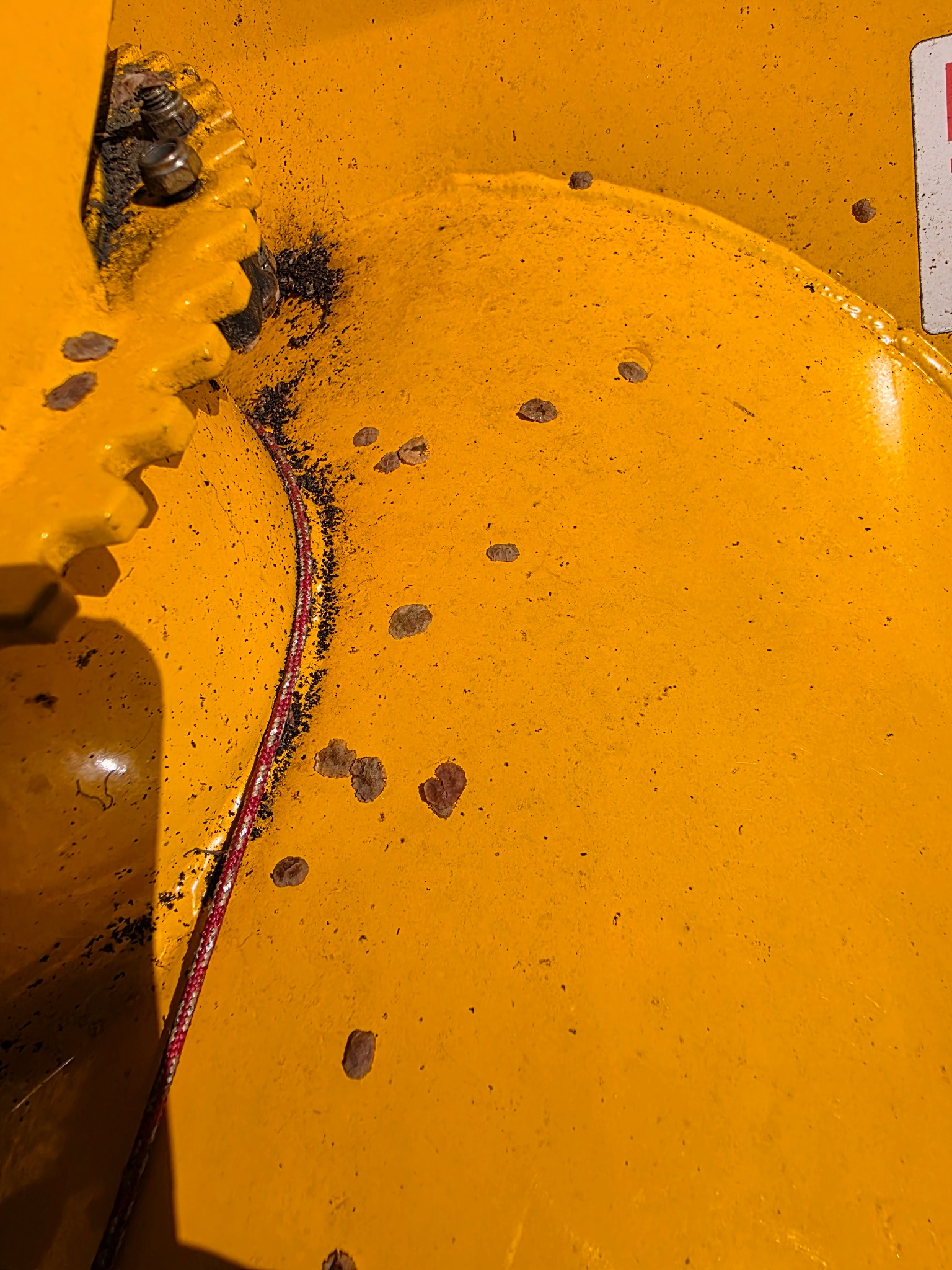
Yesterday I noticed a scatter of small, round, papery things stuck to the yellow snowblower.
They reminded me of elm seeds — thin, almost translucent disks with something darker in the center. I looked at them, assumed they were some sort of seed, and thought nothing more about it.
This morning, walking the road with Chris and the dogs, I noticed something else.
The leaves on the road were brown.
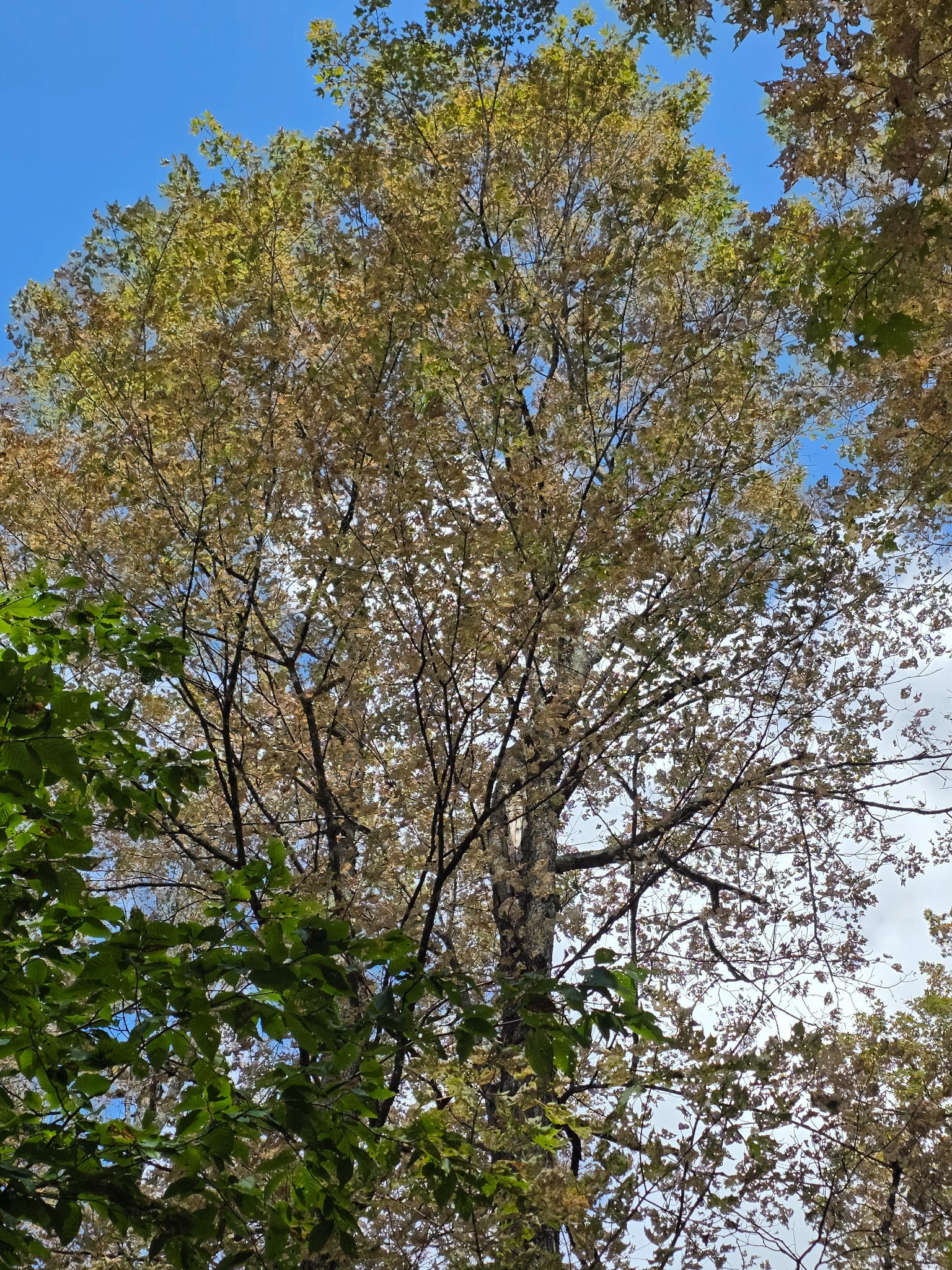
Not green and yellow and orange mixed together the way they usually are as fall begins. Brown. The maple leaves overhead looked the same, and many of them were riddled with holes.
A small maple sucker growing from the base of one tree gave me leaves low enough to examine. Some were still partly green, but the surfaces were covered with pale, dead patches and round holes of different sizes. Others were already thin, brown, and badly perforated.
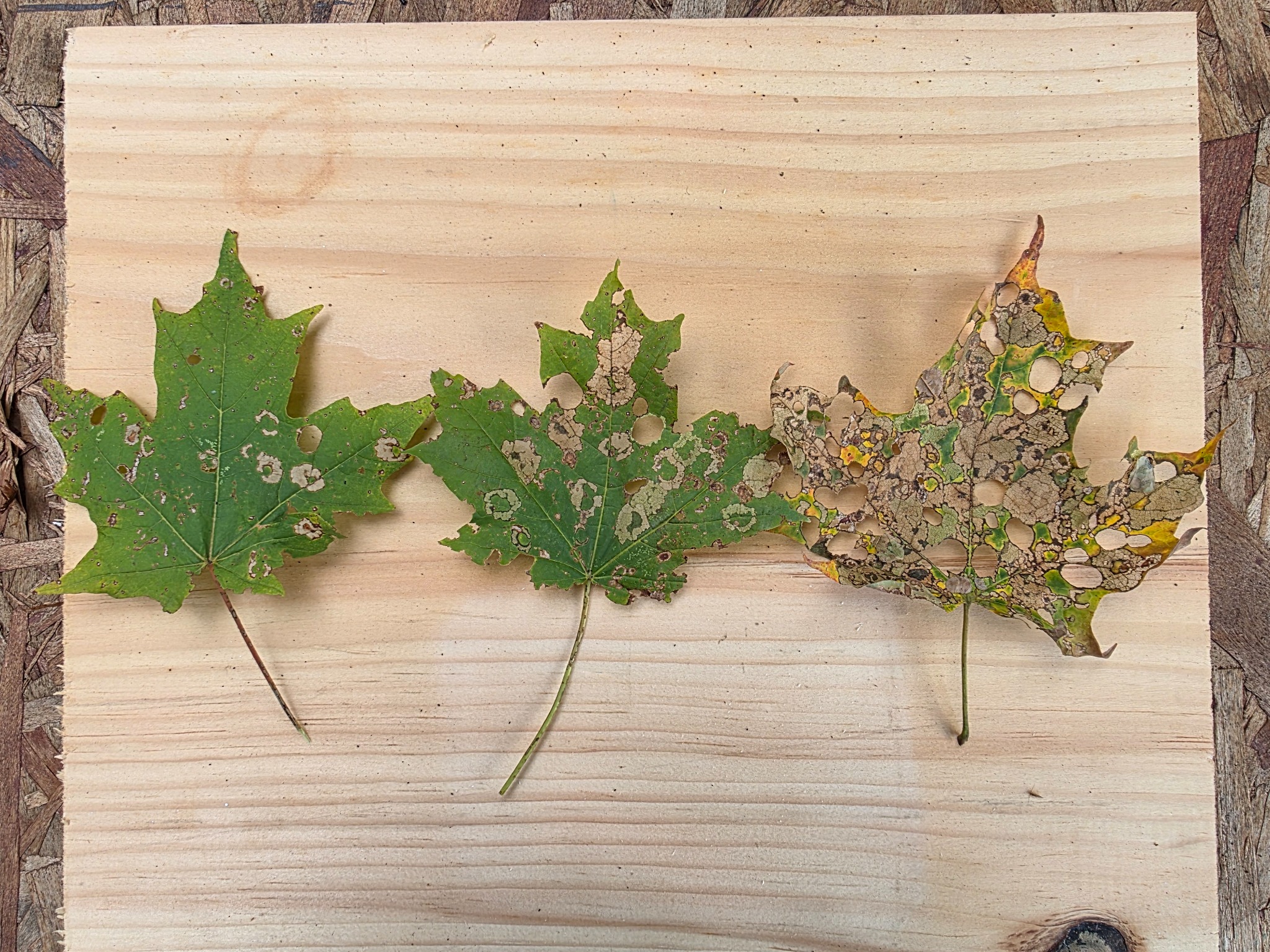
On those leaves were the same little disks I had seen on the snowblower.
They were not seeds.
Each appeared to be made from pieces cut directly from the maple leaf. Two pieces were fastened together, one over the other, forming a small flattened case. When I opened one, a larva was inside.
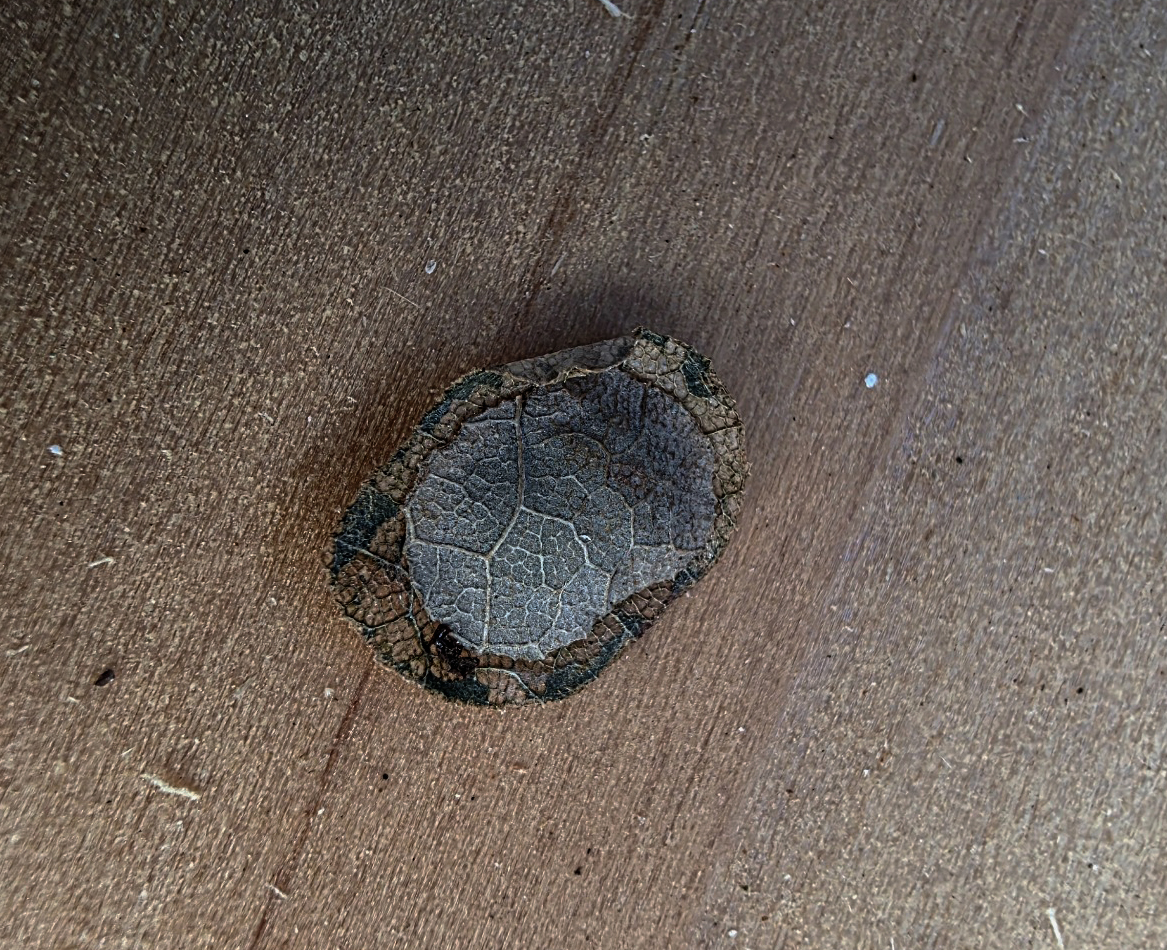
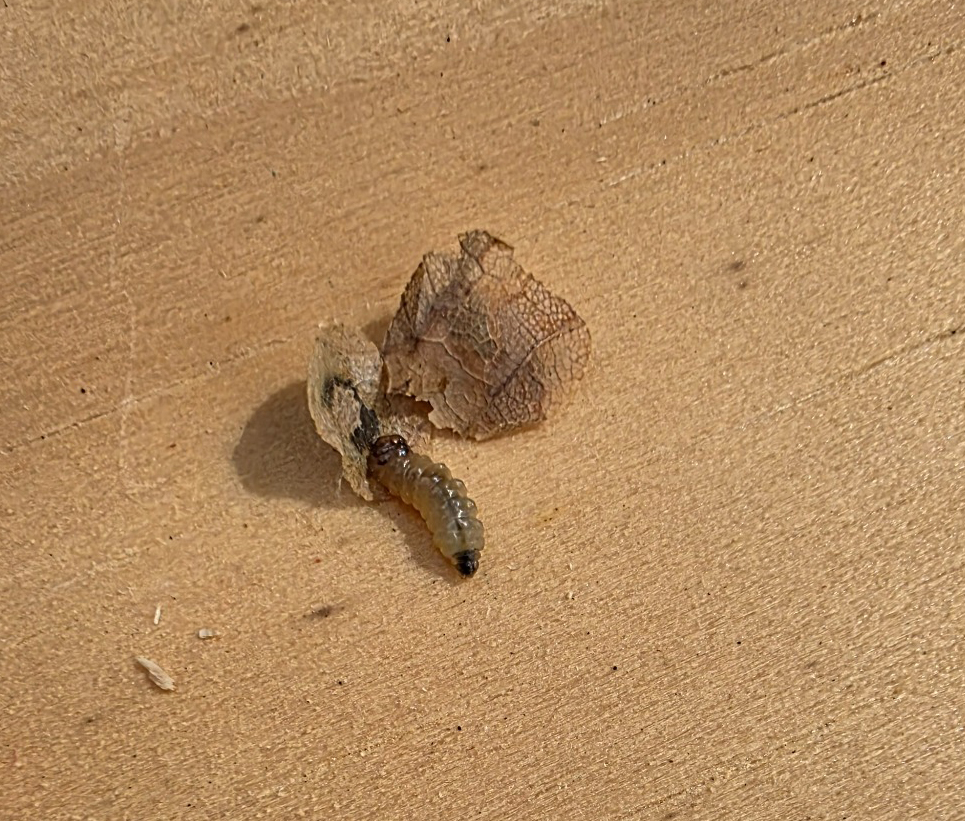
The insect was the maple leafcutter, Paraclemensia acerifoliella.
The little case fit the cutouts in the leaves. Around them, the remaining leaf tissue had been eaten down until little more than the veins and a thin papery surface remained.
The structure reminded me of a case-making caddisfly larva carrying a shelter assembled from material around it. Different insect, different environment, same basic solution: build a case and carry it with you.
Looking up, the maple canopy beside the snowblower had taken on a washed-out tan-brown cast while much of the surrounding vegetation remained green. By mid-September, the maples should have been moving toward fall color.
Instead, the canopy looked spent.
What it means for the trees will take another season to know. What happened this fall is already clear.
The maples did not turn.
They went brown.