
THEN THE KINGFISHER ARRIVED
Date / Moment: August 29, 2026, early morning
Location: Pondside lean-to
Type: REFLECTION
An accidental test of AI writing and field authorship.
I was sitting at the lean-to, drinking coffee in front of the first fire I had built there all summer, when I began dictating some thoughts about AI writing.
I keep seeing complaints about “AI-generated writing,” but that phrase is being used for several different things. There is a difference between asking AI to manufacture a finished piece from almost nothing and using it to organize observations, memories, questions, research, and conclusions supplied by a person.
I decided to test the distinction with the belted kingfisher.
The bird was a random choice. I knew enough to recognize one in the field, and I had watched kingfishers move from one section of shoreline to another. Beyond that, I knew very little about them.
I asked AI to produce two pieces. The first would be an ordinary report written for a student taking a birding class—someone who knew nothing about kingfishers but needed to turn in a report. The second would imitate a Field Scrawl page in the style it had learned from working with me.
Both would be AI-generated.
The Ordinary Report
The generic report began this way:
The belted kingfisher (Megaceryle alcyon) is a distinctive North American bird associated with streams, rivers, ponds, lakes, estuaries, and other bodies of water. It is recognizable by its large head, shaggy crest, long pointed bill, and blue-gray and white plumage.
It continued with the bird’s diet, hunting behavior, nesting tunnels, breast markings, distribution, and dependence upon open water. It was competent. The information had been checked against bird references. It sounded like a report.
It could have been written without anyone ever seeing a kingfisher.
The Field Scrawl Imitation
The imitation Field Scrawl began differently:
I know the kingfisher when I see it.
That is about the extent of what I knew when this began.
It moves along the shoreline in sections. It occupies one stretch for a while, then leaves it and appears farther along. The bird seldom seems to disappear entirely. It relocates.
That version sounded more like me. It contained shorter statements, uncertainty, and the beginning of a question. It treated what was not known as part of the record.
But it was still an imitation.
AI could reproduce the form of a Field Scrawl entry. It could arrange researched information around the small amount of observation I had provided. It could imitate pauses, plain phrasing, and uncertainty.
What it did not have was a particular encounter.
There was no time, no perch, no problem with identification, and no evidence produced in the field. It had the shape of a field record without an event at its center.
Then the kingfisher arrived.
Thirty Minutes Later
Roughly thirty minutes after I had chosen the kingfisher as the subject, I was still at the lean-to. The fire was dying down, and I was getting ready to go back up and begin some work.
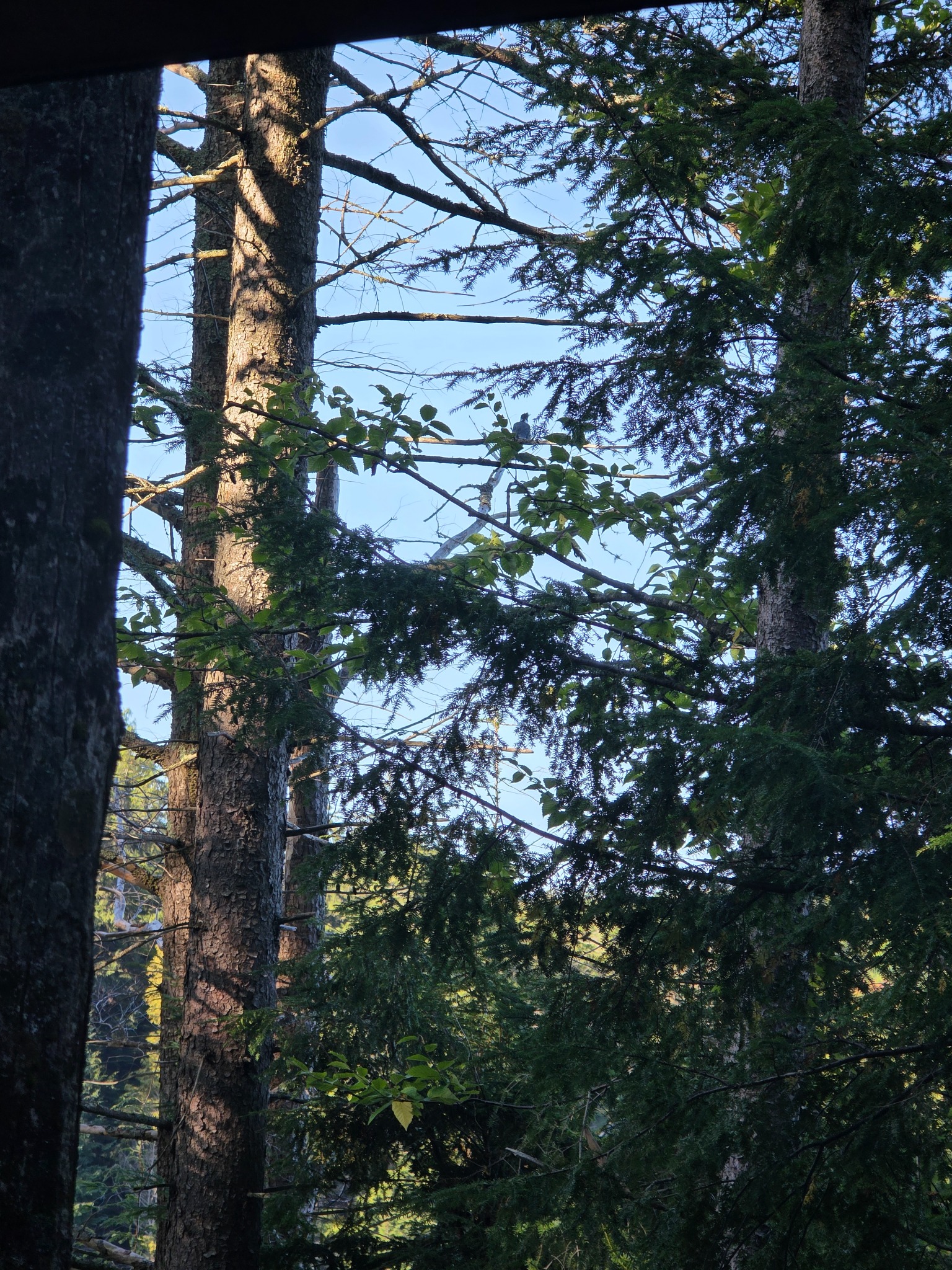
A bird landed on one of the dead branches overhanging the shoreline.
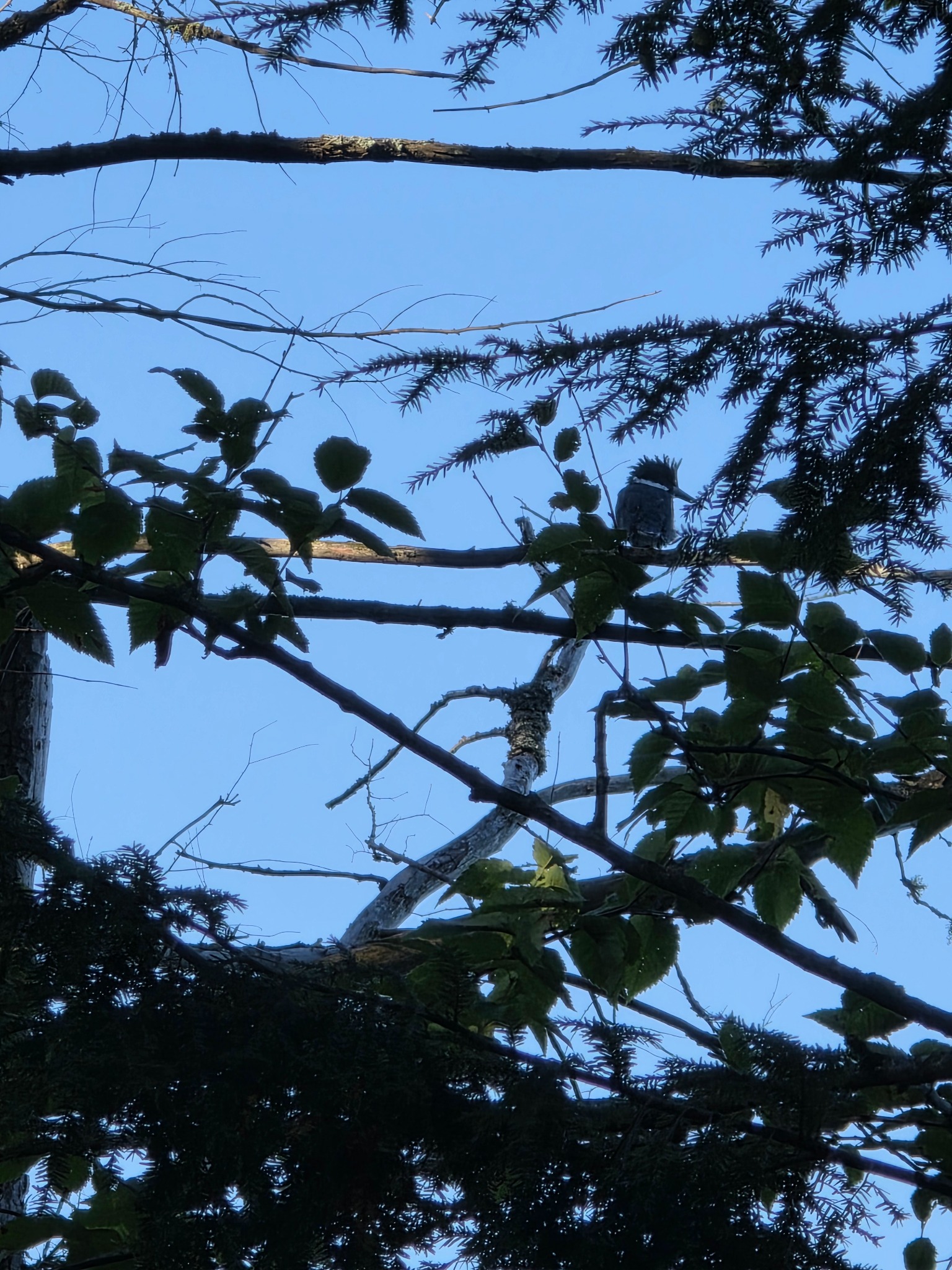
Without my glasses, I could see only its silhouette. At first I thought it might be a kingfisher. Then it raised and lowered its tail several times—the familiar tail-flick I associate with a robin—and I began to think that was what I was seeing.
The behavior suggested robin. The branch over the edge of the pond still suggested kingfisher.
My glasses were nearby, but there is always that problem. A bird finally lands where you can see it, and any sudden movement may send it off before you get a better look. I reached for the glasses carefully and put them on.
The bird turned its head.
I saw the bill.
“Oh, geez. It is a kingfisher.”
I managed to take several photographs before it left.
What the Bird Added
The timing was coincidence. I had not chosen the kingfisher because I had seen one that morning. There was nothing predictive or mystical about its arrival.
But the coincidence completed the experiment.
Before the bird landed, AI could assemble accurate information about kingfishers. It could write a generic student report. It could also imitate the language and construction of a Field Scrawl page.
What it could not supply was this particular sequence: the dying fire, the overhanging dead branch, the indistinct silhouette, the raised tail, my uncertainty between a robin and a kingfisher, the careful reach for my glasses, the moment the bird turned its head, and the photographs that followed.
AI could invent details resembling those. What makes these details different is that they are connected to a recorded sequence. I chose the kingfisher before the encounter. I dictated what happened afterward. I photographed the bird from the lean-to.
This record began with something that happened outside the writing system. The observation, uncertainty, identification, photographs, and decision to record it came from me. AI helped organize the dictation and clarify the comparison, but the physical encounter supplied the center of the page.
The photographs are not illustrations added to an AI report. They are evidence of the observation from which this record was made.
The first two pieces were AI-generated.
This page became AI-assisted when the kingfisher arrived.
AI could write about a kingfisher.
It could not make the kingfisher arrive.
WHERE THE WRITING STYLE CAME FROM
I was recently asked again where I learned to write like this.
My answer was some 40-odd years of recording observations in emergency nursing and benthic taxonomy. That is where the writing style came from.
But the question got me thinking again about my use of AI in Field Scrawl. The writing did not start with AI. And it dawned on me that using computers and software to extend what I could do did not start with AI either.
Excel was an early step. Formulas and statistical functions could do calculations that otherwise took much longer by hand. Later, for much of my benthic community work, I settled on PRIMER-E for dendrograms, SIMPROF testing and other multivariate analyses.
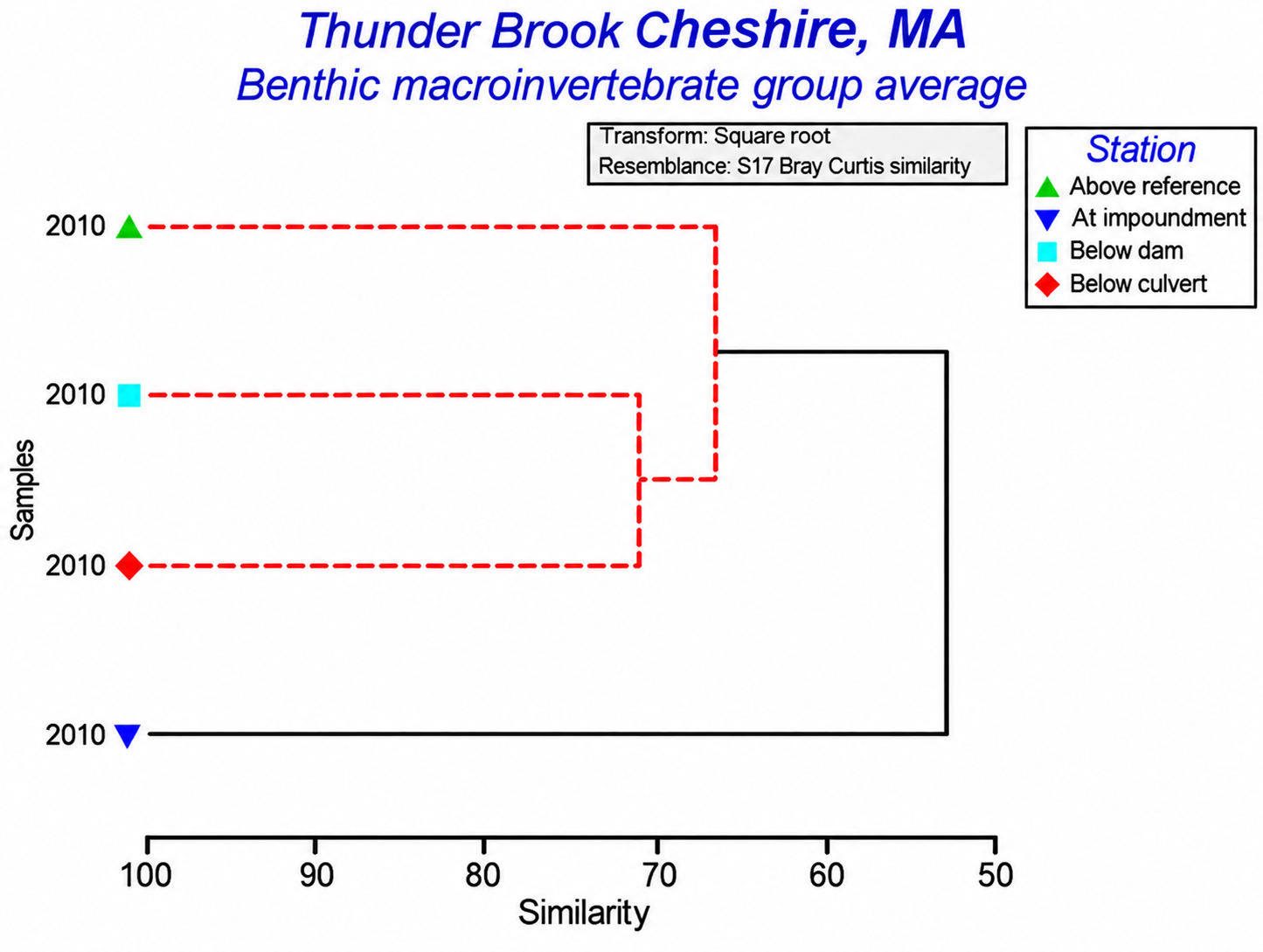
None of those programs started with the sample. I still had to collect the organisms properly, identify them, review the taxa list, decide what belonged in the dataset and format it. Then I had to decide what analysis to use and whether the result made biological sense.
At one point I built an Excel spreadsheet to calculate New York State DEC’s Impact Source Determination because I was tired of doing the calculations by hand. The formulas came directly from the New York State DEC Stream Biomonitoring Unit. They were on paper, so I had to transcribe them into the spreadsheet and check the results against hand calculations.
Some of the results did not agree.
So I went back through the spreadsheet four or five times looking for a transcription error or something I had entered incorrectly. I ran the calculations over and over. I still could not find my mistake.
And then I questioned the formulas I had been given.
The response was essentially that the problem had to be on my end. They were tired of hearing from me, but the numbers still did not agree. Eventually they went back through the formulas themselves and agreed. The errors were theirs.
I remember wondering afterward how long those errors had been sitting there, and how many calculations had been run through them.
AI is different from those earlier tools because it can work with the writing itself. It can organize material, compare sources, suggest connections and help clarify what I am trying to say. It can also be wrong while sounding right.
That makes the question of authorship more complicated than it was with Excel or PRIMER-E, but it does not change where the responsibility lies. I still have to check what I give it and what comes back. The responsibility remains in the same place: with me.
Source Note
General information used in the two AI-generated examples was checked against the Cornell Lab of Ornithology’s Belted Kingfisher account and the National Audubon Society Field Guide. Cornell’s American Robin identification account notes that robins habitually flick their tails downward several times when alighting.