
THUNDER CELL
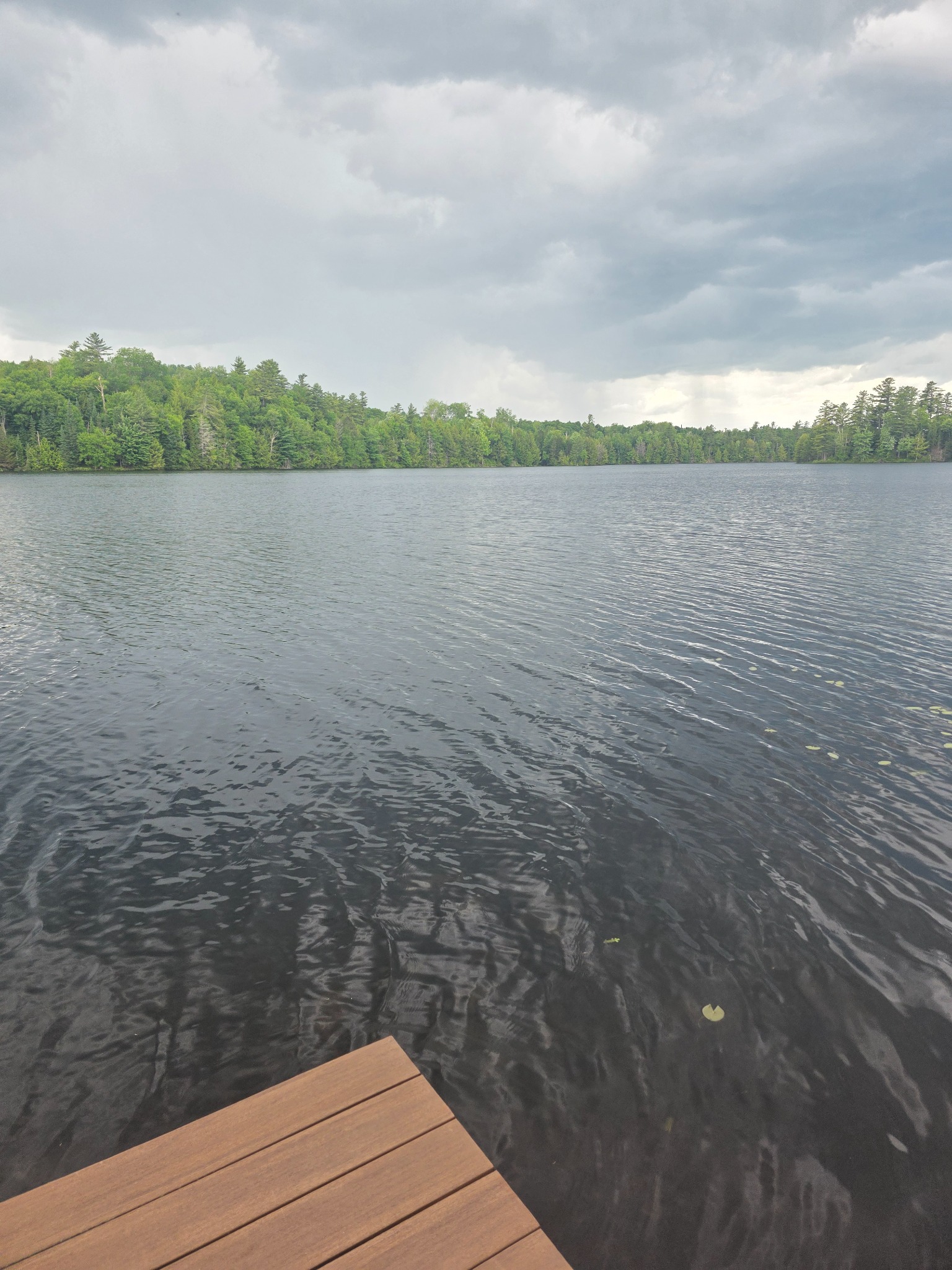
It was almost noon when I went down to the dock to fish for a little while.
I made two casts.
Then I heard thunder.
At first, with my hearing loss and the sound coming low across the pond, I thought it was heavy equipment being used on the other side. The sound held too long for that. Then it grew. I had already noticed dark clouds coming in from the northeast, and beyond the pond I could see columns of rain in the distance.
That was enough.
I got off the dock.
The first record here is not the storm. It is the decision to leave open water.
I moved back to the lean-to and watched from cover. I was sitting there with my legs up, enjoying the comfort of being out of the direct weather. The wind had been steady out of the southeast, and that was still the dominant direction, but the pond surface began to break into small swirls from other directions. The water showed the change before the heavier rain fully arrived.
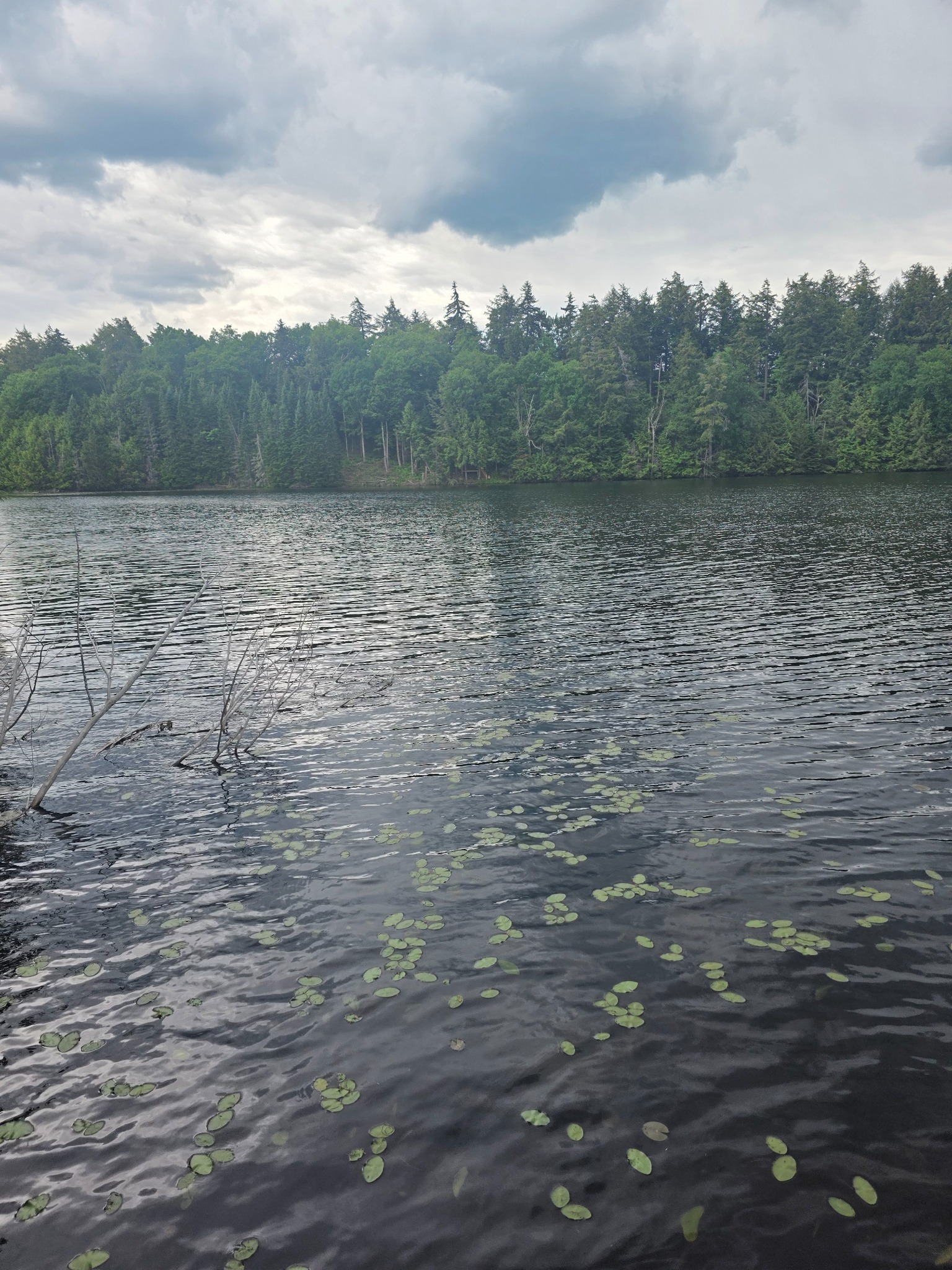
Then the rain thickened.
The storm brought back a childhood memory.
At camp with my mother, there was a big picture window. I remember sitting in front of that glass during storms and watching the weather come across the mountain. At night, lightning made a light show. During the day, dark clouds changed the light inside before the rain fully arrived.
The glass helped make it comfort.
My mother made it comfort.
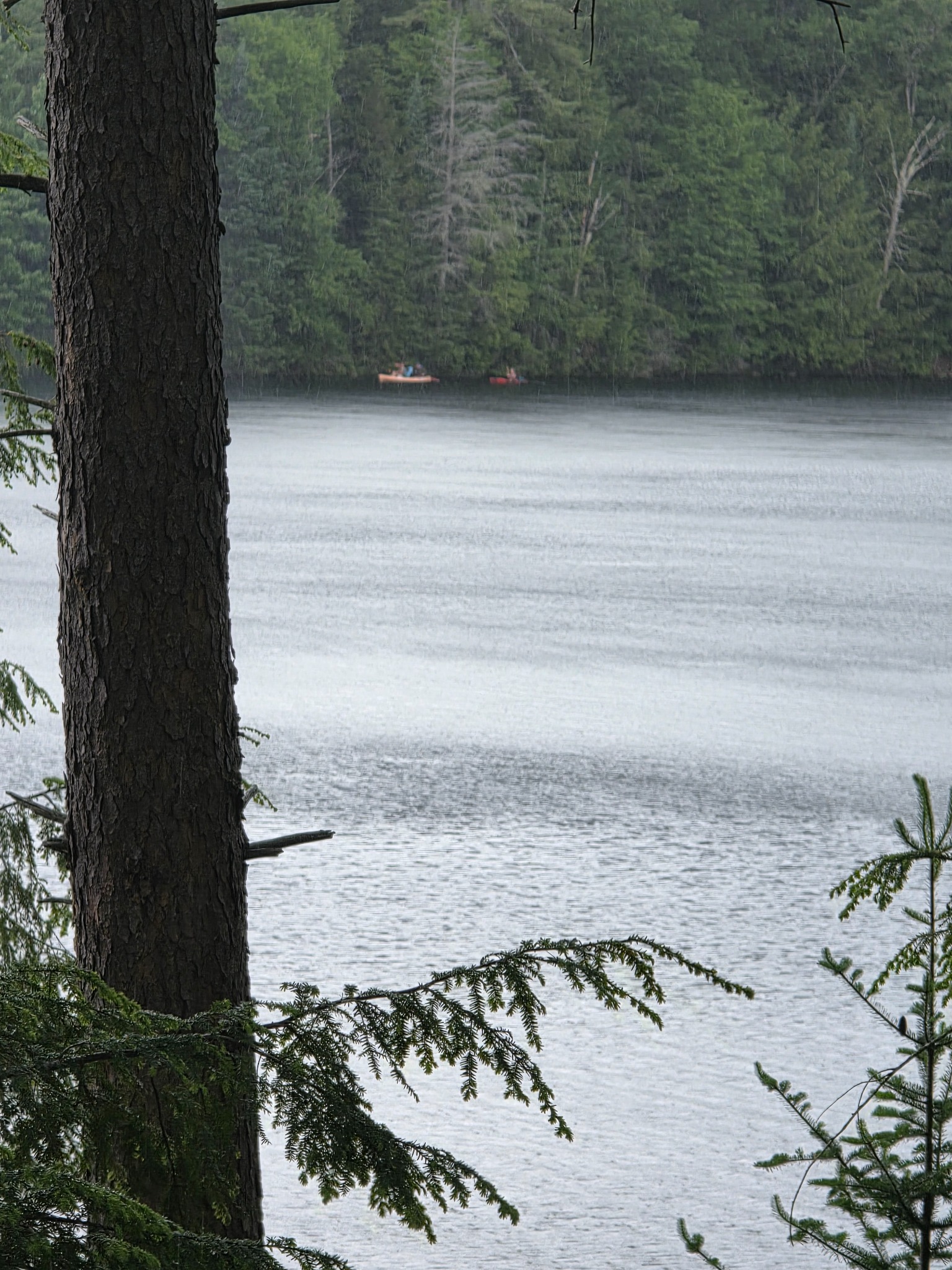
Three kayakers appeared on the far shore, hugging the edge and heading back toward their put-in. From where I sat, legs up inside the lean-to, that was an oh-shit moment.
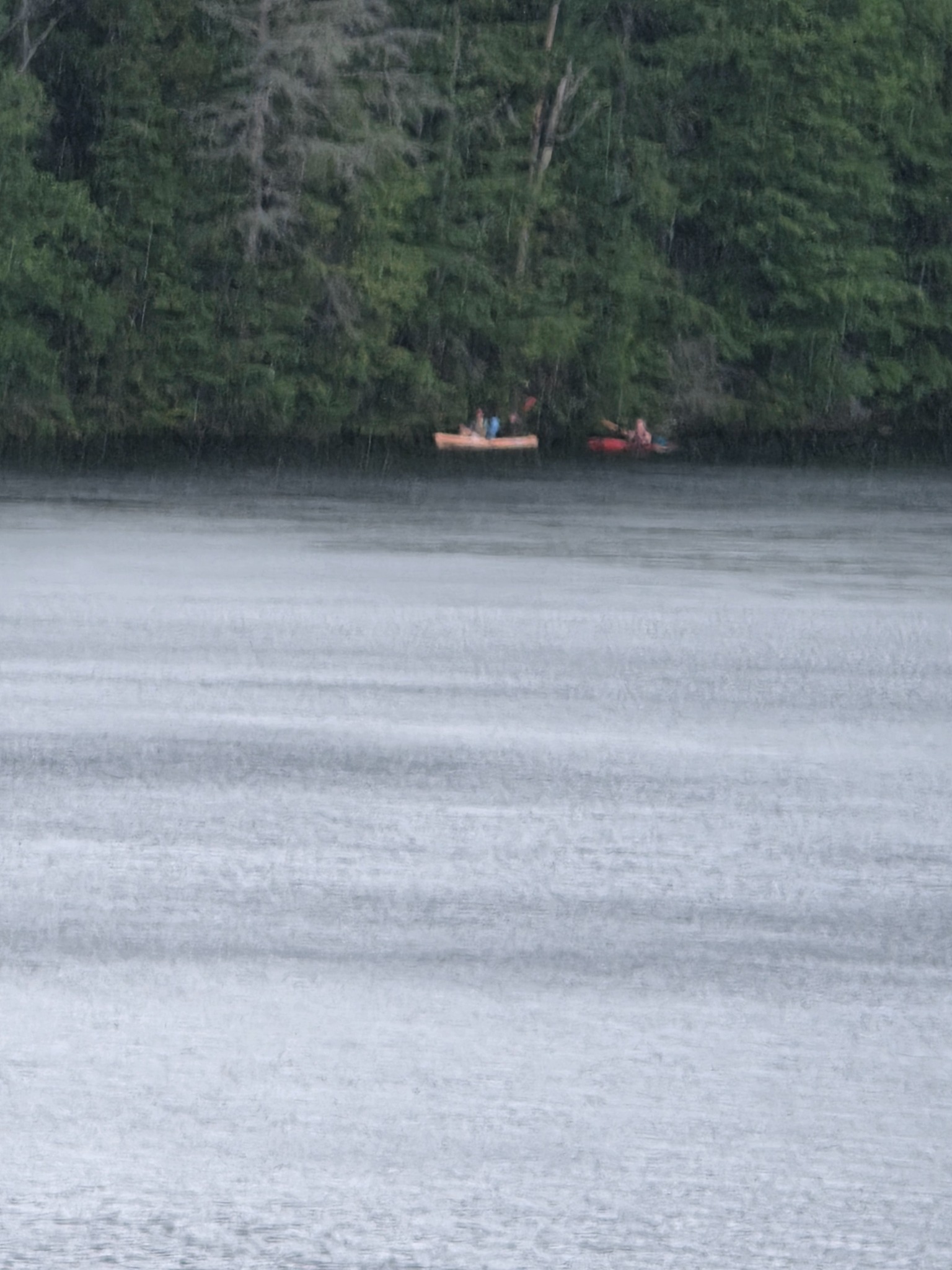
That was not a claim about what they thought. It was my own recognition. I have been in that position before on lakes: heavy wind, dark clouds, thunder closing distance. Sometimes you paddle faster. On rare occasions you get out, pull the boat up, hunker down, and wait.
The same storm that could be watched from behind glass was now moving over people in small boats.
It was not the rain.
It was not even the thunder.
It was what you do not know, and what you do not hear, that can get you.
When I was a kid, swimming was the main activity during the summer. We lived in our swim shorts. You woke up in the morning and went to breakfast already dressed for the water, because everybody knew where the day was going.
When a thunderstorm rolled in, swimming stopped.
We got out of the water and went back to camp.
After the storm passed, we were ready to go right back in, but we could not. There was a kitchen timer on the stove. Not the built-in kind. It was a separate ticking dial timer. You turned it by hand, set it for the number of minutes, and listened while it ticked down.
When it reached zero, it rang.
After thunder, the timer was set for fifteen minutes.
If no more thunder sounded before the bell, the cell was far enough away and swimming could begin again.
That old rule came back while I sat in the lean-to.
The rain began to back off. The sky started to lighten. I thought about waiting fifteen minutes after the last thunder and going back down to the dock to fish again.
The kayakers were no longer in the open water I could see.
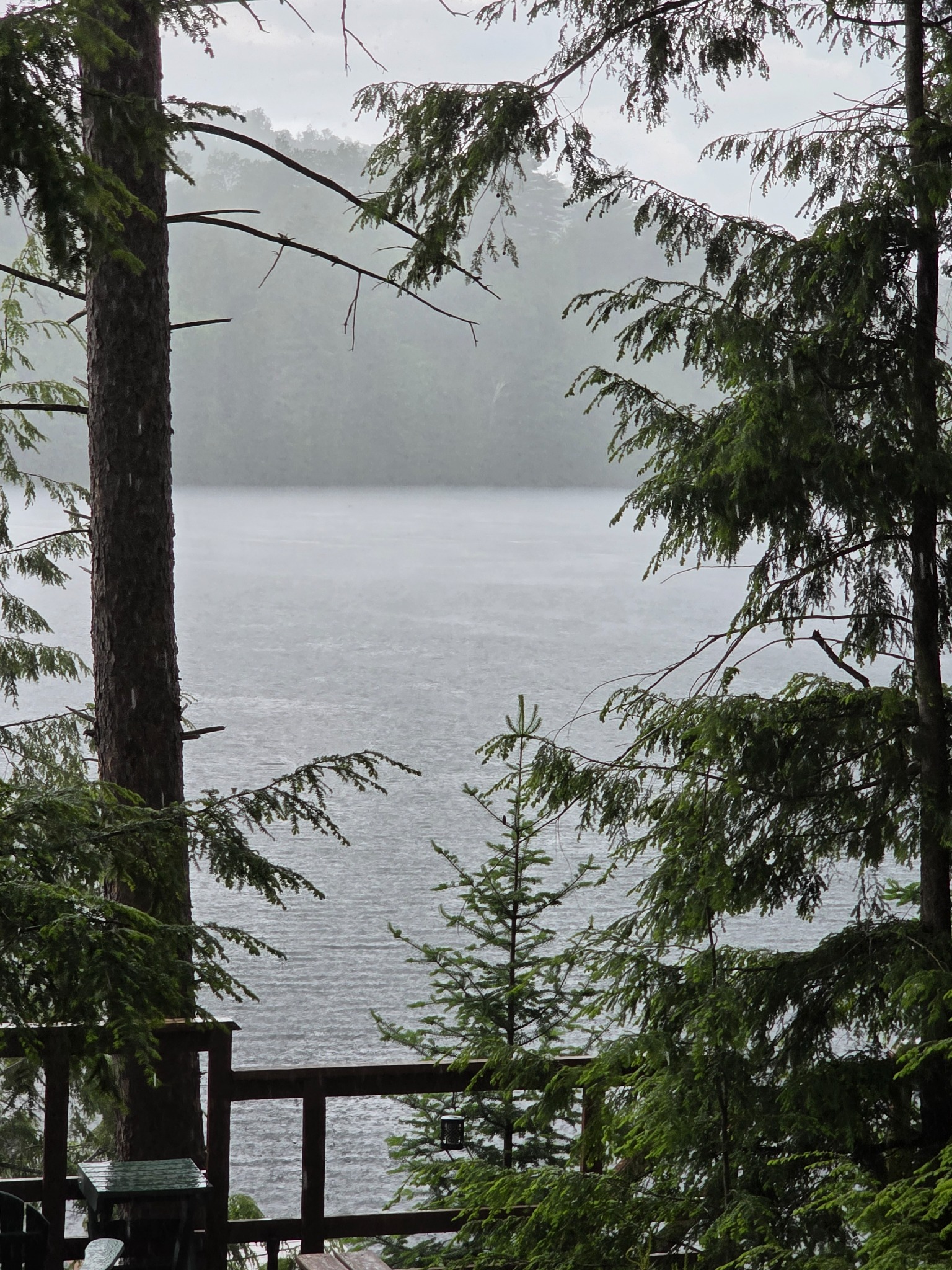
The pond still held the record of the cell on its surface: rain marks, confused wind, small broken directions crossing one another before the water began to settle.
Then hunger won.
I stood in front of the lean-to a little longer, looked toward the dock, and decided not to go back down.
The temperature had dropped. Everything outside was wet. The barn was dry and warm, with remnants of live coals still in the wood stove.
And there was food.
I went back to the barn instead.